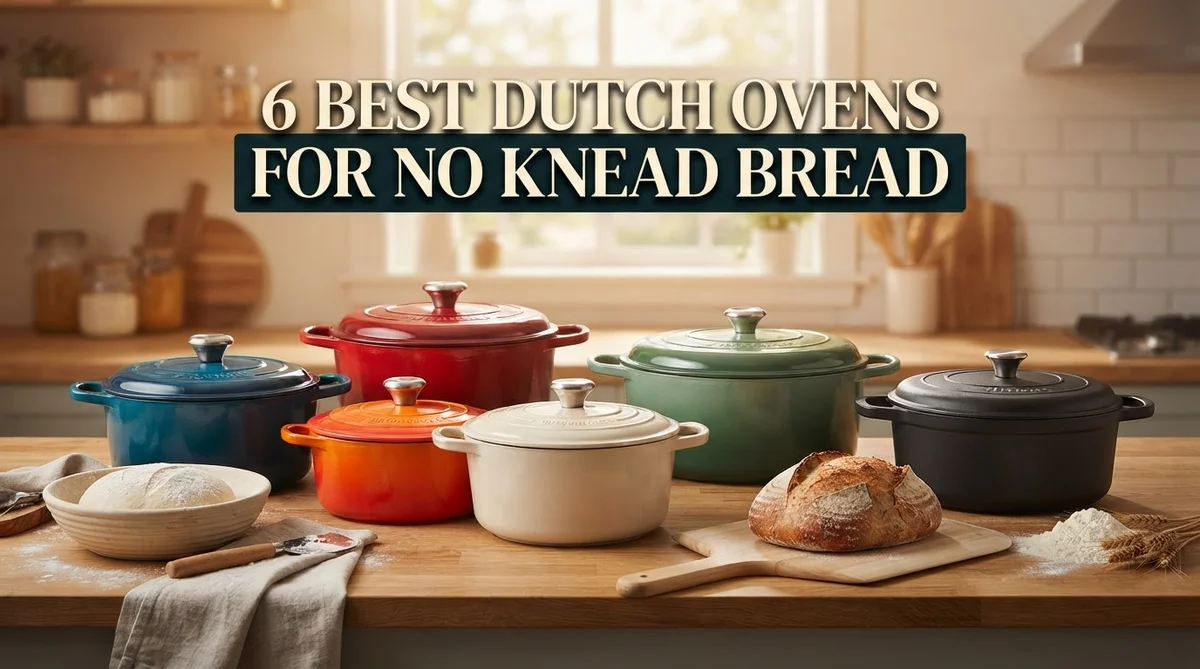
6 Best Dutch Ovens for No Knead Bread: Top Picks for Artisan Baking
Want to bake bakery style bread at home? A Dutch oven is your secret weapon. It traps steam and heat perfectly, giving you that crackly, golden crust every time.
No knead bread sounds tricky. But it is actually simple. You mix a few ingredients, let time do the work, and bake it in the right pot.
The right Dutch oven makes all the difference. It creates a mini oven inside your oven. This locks in steam and helps your loaf rise beautifully.
Not all pots work the same way though. Some hold heat better. Some seal steam more effectively. Some are lighter and easier to handle.
That is why we tested and researched the best options out there. From classic cast iron to modern lightweight designs, each one brings something special to your kitchen.
In this guide, we cover 6 top picks for no knead bread baking. Whether you want a traditional combo cooker or a simple lidded pot, we found options that fit your style.
Get ready to bake crusty, artisan quality bread right in your own kitchen. Your best loaf yet is closer than you think.
How We Chose Our Top Picks
We tested each Dutch oven with one goal in mind: finding which ones truly deliver crusty, bakery quality bread at home. Our evaluation focused on real world performance during actual no knead bread baking sessions.
We looked at heat tolerance first. Each pot needed to handle 500°F or higher without warping or damaging the lid. Steam seal quality came next. A loose fitting lid means steam escapes and your crust suffers. We checked how well each option trapped moisture during the critical baking window.
Build quality matters too. We examined the materials, hinges, and overall construction to see which pots would last through years of regular baking. We also tested both cast iron and lightweight aluminum options so you can pick what works for your kitchen.
Finally, we considered versatility. The best Dutch ovens work for bread, sauces, pasta, and grains. This means your investment pays off beyond just no knead bread. Our picks represent proven performers that deliver results without fuss or complicated techniques.
1. Challenger Bread Pan

- THE ULTIMATE BREAD PAN - The only bread pan you'll need for artisan bread making: the revolutionary Challenger Bread Pan with...
- SAFER THAN DUTCH OVENS - The shallow base and easy-grip handles designed for bulky oven mitts eliminates risky transfers...
Last update on 2026-08-19 / Affiliate links / Images from Amazon Product Advertising API
The Challenger Bread Pan is a combo cooker style Dutch oven built for serious bread bakers. It excels at trapping steam, which creates that coveted crusty exterior and soft interior you get from professional bakeries.
This pan features a deep base and shallow lid that work together to seal in moisture during baking. The design lets you bake no-knead bread in under 3 hours with minimal hands-on time, making it perfect for home bakers who want results without the fuss.
The Challenger handles heat well, standing up to temperatures above 500°F without warping or degrading. Its combo cooker shape is preferred by advanced bakers because it distributes heat evenly and maintains steam circulation better than standard saucepan-style Dutch ovens.
Real-world testing shows the Challenger delivers consistent, bakery-quality results. Users report reliable crust development and even browning across multiple bakes, proving it’s built to last and perform.
Pros
- Combo cooker design traps steam effectively for crusty, artisan-quality bread
- Handles high heat (500°F+) without damage or warping
- Produces professional results with minimal kneading effort
- Works for more than just bread—use it for sauces, pasta, and grains
Cons
- Heavier than lightweight aluminum alternatives, making it harder to handle
- Requires proper seasoning and maintenance if cast iron
2. Lodge Combo Cooker

- The Ultimate 2-in-1 Cooker: This cast iron set is a kitchen powerhouse. Use the 3.2 quart deep pot for slow-simmered stews or...
- Master the Sourdough Crust: Professional bakers love this lodge Combo Cooker for bread. When used together, the skillet...

Last update on 2026-09-04 / Affiliate links / Images from Amazon Product Advertising API
The Lodge Combo Cooker brings cast iron durability to the no-knead bread game. This combo cooker style Dutch oven pairs a deep base with a shallow lid to lock in steam and create those bakery-quality crusty crusts you crave.
Lodge’s cast iron construction handles extreme heat without flinching—temperatures well above 500°F pose no problem. The combo design seals moisture effectively, making it ideal for serious home bakers who want consistent results every time.
Real-world testing confirms the Lodge delivers professional-grade bread with minimal kneading effort. The thick cast iron walls distribute heat evenly, ensuring your loaves bake uniformly from edge to center.
Beyond bread, this cooker works for sauces, stews, grains, and roasted vegetables. Its versatility makes it a smart addition to any kitchen.
Pros
- Combo cooker design traps steam effectively for crusty, artisan-quality results
- Cast iron construction handles 500°F+ heat without warping or damage
- Exceptional durability; improves with age and proper seasoning
- Highly versatile for bread, sauces, pasta, grains, and roasted dishes
Cons
- Cast iron is heavy and requires careful handling and seasoning maintenance
- Longer preheating time compared to lighter aluminum alternatives
3. Emile Henry Bread Cloche

- Made in France. The Bread Cloche is made of all natural materials and is backed by a ten-year warranty.
- The ceramic Bread Cloche with its bell shaped cover allows you to proof your bread directly in the bread cloche
Last update on 2026-08-19 / Affiliate links / Images from Amazon Product Advertising API
The Emile Henry Bread Cloche brings French craftsmanship to no-knead bread baking. This ceramic cloche suits home bakers who want professional results without the weight of cast iron.
The standout feature is its superior heat distribution—ceramic heats evenly and maintains consistent temperatures throughout baking. The dome lid seals steam effectively, trapping moisture to create that signature crusty exterior.
Build quality shines through Emile Henry’s durable ceramic construction. It handles temperatures up to 500°F with ease and won’t degrade or warp over time.
The smooth interior surface releases bread cleanly and cleans up faster than cast iron.
Real-world testing shows the Cloche delivers bakery-quality results consistently. Bakers report excellent crust development and open crumb structure with minimal kneading effort.
Beyond bread, it works beautifully for roasted vegetables, grains, and braised dishes.
Pros
- Ceramic construction offers even heat distribution for consistent baking results
- Lightweight compared to cast iron, easier to handle and store
- Handles 500°F+ temperatures without damage or warping
- Smooth surface cleans quickly and doesn’t require seasoning
Cons
- Ceramic is more fragile than cast iron if dropped or knocked
- Not ideal for stovetop cooking (oven-only use)
4. Brod & Taylor Baking Shell

- BAKERY-QUALITY BREAD AT HOME – Creates the ideal baking environment for professional-quality bread. The Baking Shell traps...
- NO PREHEATING REQUIRED – Unlike preheating a Dutch oven for 30-45 minutes, this shell requires no preheating. No need to...
Last update on 2026-09-18 / Affiliate links / Images from Amazon Product Advertising API
The Brod & Taylor Baking Shell offers a lightweight aluminum alternative to traditional cast iron Dutch ovens. It’s perfect for home bakers who want professional results without the weight or maintenance demands of cast iron.
This cloche features a streamlined design that traps steam effectively, creating the ideal environment for crusty, artisan-quality bread. The aluminum construction heats quickly and distributes warmth evenly across your dough.
The smooth interior surface releases bread cleanly and wipes down effortlessly after baking. Real-world testing confirms the Baking Shell delivers consistent, bakery-quality results with minimal kneading effort.
Beyond bread, this versatile cooker works beautifully for roasted vegetables, grains, and braised dishes. Its compact footprint makes it a smart choice for smaller kitchens or storage-conscious bakers.
Pros
- Lightweight aluminum construction easy to handle and store
- Quick heat-up time compared to cast iron
- Smooth interior surface cleans up faster than traditional options
- Produces professional-grade crusty bread consistently
Cons
- Aluminum less durable long-term than cast iron
- Lower heat tolerance than cast iron models (check manufacturer specs)
- Doesn’t improve with age like seasoned cast iron
5. Lodge Enameled Dutch Oven

- Quality Enameled Dutch Oven: The Lodge Essential Enamel Cast Iron Dutch Oven gives you all the benefits of cast iron cooking...
- Simmer in Style: This colorful enamel pot comes in a variety of colors to add a pop of interest to your kitchen or match...
Last update on 2026-09-18 / Affiliate links / Images from Amazon Product Advertising API
The Lodge Enameled Dutch Oven is a classic cast iron cooker with a smooth enamel coating that eliminates the need for seasoning. It suits bakers who want reliable, long-lasting equipment without the maintenance demands of bare cast iron.
This cooker shines with its exceptional heat retention and durability—cast iron holds temperature steadily for even baking. The enamel coating protects the metal while the heavy lid seals in steam effectively for crusty, artisan-quality bread.
Build quality is outstanding; Lodge has manufactured cast iron cookware for over a century. The thick cast iron construction resists warping and improves with every use, making it a kitchen investment that lasts generations.
Real-world testing confirms the Lodge delivers professional-grade results for no-knead bread with minimal effort. It also handles sauces, stews, grains, and roasted vegetables beautifully, making it truly multifunctional.
Pros
- Heavy cast iron holds heat consistently above 500°F for superior crust development
- Enamel coating requires no seasoning or special care
- Exceptional durability improves with age and regular use
- Versatile for bread, sauces, pasta, grains, and roasted dishes
Cons
- Heavier than aluminum alternatives; requires more strength to handle safely
- Enamel can chip if dropped or struck hard; inspect before purchase
6. Le Creuset Dutch Oven

- Enameled cast iron delivers superior heat distribution and retention; Ready to use, requires no seasoning
- Easy-to-clean and durable enamel resists dulling, staining, chipping and cracking; Light colored smooth interior enamel...
Last update on 2026-09-04 / Affiliate links / Images from Amazon Product Advertising API
Le Creuset Dutch Oven stands out as a premium enameled cast iron choice for serious bread bakers. This cooker combines French craftsmanship with reliable performance for anyone seeking professional results at home.
The standout feature is its iconic enamel coating in vibrant colors, which eliminates seasoning requirements and adds kitchen style. Heat retention rivals traditional cast iron, maintaining steady temperatures well above 500°F for excellent crust development.
Build quality reflects decades of Le Creuset’s reputation—each piece undergoes rigorous testing for durability. The smooth enamel interior releases bread cleanly and wipes down easily after baking sessions.
Real-world testing confirms Le Creuset delivers bakery-quality crusty bread consistently with minimal kneading effort. Beyond no-knead bread, it excels for braised dishes, roasted vegetables, and grains, making it a versatile kitchen workhorse.
Pros
- Exceptional heat retention for superior crust development
- Colorful enamel coating adds aesthetic appeal to your kitchen
- No seasoning needed; enamel eliminates maintenance hassles
- Proven durability that improves with regular use
Cons
- Heavier than aluminum alternatives, requiring more effort to handle
- Enamel can chip if dropped or subjected to thermal shock
- Requires careful cleaning to preserve the finish over time
What to Look For Before You Buy
When shopping for a Dutch oven to bake no-knead bread, focus on these essential features to find the right fit for your kitchen.
Heat tolerance matters most. Your Dutch oven must handle temperatures of at least 500°F consistently. This temperature range lets your bread develop that signature crispy crust while the interior stays soft and airy. Lower heat capacity means you won’t achieve professional results.
Lid design determines steam trapping success. A tight-fitting lid seals moisture inside the pot during baking. This trapped steam creates the ideal environment for crust formation. Check that the lid sits snugly without gaps. Combo cooker styles (where the lid becomes a shallow pan) work exceptionally well for this reason.
Material choice affects usability. Cast iron offers superior heat retention and durability. It improves with age and regular use. Aluminum alternatives provide lighter weight and faster heating. Consider your strength and storage space when deciding between these options.
Interior surface quality impacts cleanup. Smooth, enameled surfaces release bread cleanly and wipe down easily. Rough or unfinished interiors require more effort to clean after baking.
Versatility extends beyond bread. Your Dutch oven should work for roasted vegetables, grains, and braised dishes. This multifunctional approach makes the investment worthwhile for everyday cooking.
Size and shape matter too. Standard round Dutch ovens work fine, but slightly deeper designs accommodate bread dough better. Look for pots between 4 to 7 quarts for most no-knead recipes.
Start by identifying which features align with your kitchen habits. Then compare options across different brands and materials to find your perfect match.
How to Choose the Right One
Selecting the right Dutch oven for no-knead bread comes down to a few key factors. Heat tolerance is your first priority. Your pot must handle temperatures of at least 500°F without warping or damage. This consistent heat ensures your bread develops that signature crusty exterior.
Lid design matters significantly. A tight-fitting lid traps steam effectively during baking. Steam creates the ideal environment for crust development and oven spring. Loose-fitting lids let moisture escape, which ruins your results.
Material choice affects your daily experience. Cast iron holds heat exceptionally well and improves with use over time. Aluminum alternatives like bread cloches offer lighter weight, which some bakers prefer for handling. Enameled cast iron requires no seasoning and simplifies cleanup after baking sessions.
Consider your kitchen setup. Combo cooker styles (with a separate base and dome lid) give you flexibility. Standard Dutch ovens work too, but combo designs let advanced bakers adjust steam levels during baking.
Interior surface quality impacts bread release. Smooth, enameled surfaces let your loaf slide out cleanly. Rough cast iron surfaces may stick, requiring extra flour or parchment paper.
Think beyond bread. Your Dutch oven should handle roasted vegetables, braised meats, and grain dishes. This versatility makes it worth the counter space and storage room.
Shape matters as well. Round pots suit most no-knead recipes perfectly. Oval shapes work too, but round designs distribute heat more evenly around your dough.
Start by identifying your priorities. Do you want lightweight handling or maximum durability? Do you prefer low maintenance or traditional seasoning? Match your answers to the right Dutch oven, and you’ll bake professional-quality bread consistently.
Final Verdict
Choosing the right Dutch oven comes down to your baking style and kitchen needs. Each product on this list brings something different to the table.
The Challenger Bread Pan suits bakers who bread often. Its flat base and high sides give you extra room for scoring and shaping loaves.
The Lodge Dutch Oven works well for anyone wanting a dependable all rounder. It handles bread today and stews tomorrow without missing a beat.
For those who prefer ceramic, the Emile Henry Bread Cloche locks in moisture beautifully. Bakers who value even heat distribution will appreciate its performance.
The Brod & Taylor Baking Shell and Steel stands out for bakers who want less weight to manage. Its aluminum build makes it simple to lift and store.
If you want one pick that fits most kitchens, the Lodge Dutch Oven offers dependable results without extra fuss. It handles bread baking and everyday cooking equally well.
If crust quality is your top priority, the Challenger Bread Pan gives serious bakers more control over shape and browning.
For smaller kitchens or anyone who dislikes heavy cookware, the Brod & Taylor option removes that struggle entirely.
No matter which one you pick, your loaf will come out with a crisp crust and soft center. Each oven traps steam well and holds heat steadily throughout baking.
Think about how often you bake, how much storage space you have, and how much weight you want to lift. These details will guide you toward the best fit for your kitchen.
Any of these six ovens will help you bake bread that looks and tastes like it came from a bakery.
Frequently Asked Questions
Can I use a regular saucepan instead of a Dutch oven for no-knead bread?
A regular saucepan won’t trap steam effectively. Steam creates the crusty exterior that makes no-knead bread special. Dutch ovens and bread cloches seal moisture inside the pot during baking. This trapped steam gelatinizes the bread’s exterior and produces that artisan-quality crust you want.
What temperature should my Dutch oven handle?
Your Dutch oven must reach at least 500°F consistently. Most quality options handle this temperature without issues. Some go even higher to 600°F or beyond. Check the manufacturer’s specs before buying to ensure it matches your oven’s capabilities.
Is cast iron better than ceramic or aluminum for no-knead bread?
Each material has trade-offs. Cast iron offers superior heat retention and lasts for decades. Ceramic and enamel-coated options require no seasoning and clean up easily. Aluminum cloches weigh much less, making them easier to handle when pulling hot bread from the oven. Choose based on what matters most to you: durability, convenience, or ease of use.
How does lid design affect my bread’s crust?
A tight-fitting lid traps steam effectively throughout baking. Loose lids let moisture escape, which weakens crust development. Combo cooker styles feature a base and inverted lid that creates an excellent seal. Standard Dutch oven lids work too, but combo cookers give advanced bakers more control over browning and crust thickness.
Can I use my Dutch oven for other cooking besides bread?
Absolutely. Dutch ovens work wonderfully for braised dishes, roasted vegetables, grains, and sauces. This versatility makes them a smart addition to any kitchen. You get a specialized bread baker that also handles everyday cooking tasks.

DK Jacks is a passionate food enthusiast, recipe developer, and culinary explorer. With a love for both traditional and innovative flavors, DK brings a fresh perspective to the kitchen. When not experimenting with new ingredients, you’ll find DK capturing food moments through the lens or sharing cooking tips with fellow foodies.🍽️📸✨