
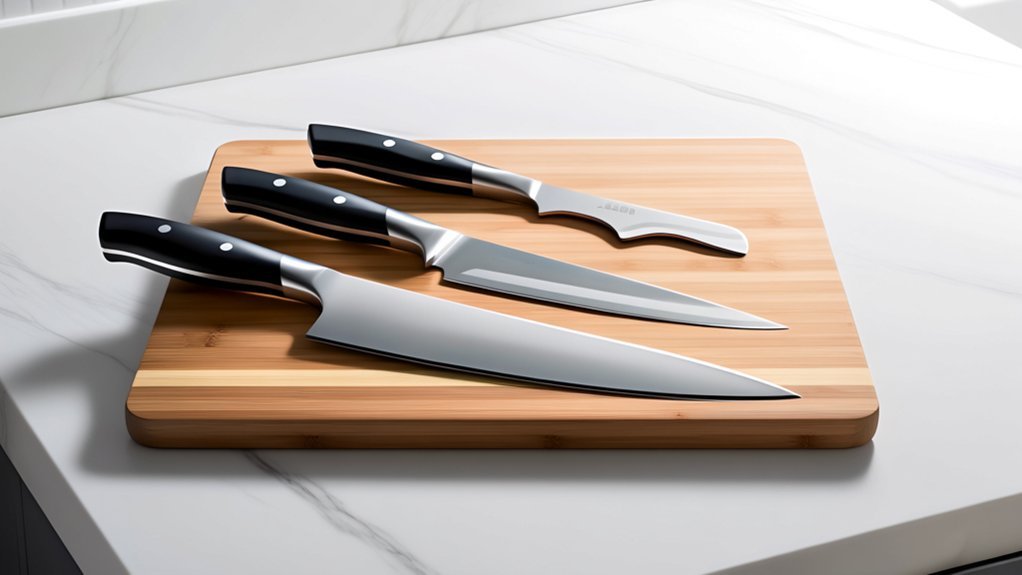
3 Best Chef Knives for Home Cooks
Choosing the right chef knife can transform your kitchen experience, making prep safer and more efficient. Whether it’s the versatile Misen 8-Inch with AUS-10 steel, which holds an edge longer, or the beautifully layered XINZUO Damascus set that combines artistry with functionality, each offers unique advantages. The Regalia Gyuto, crafted from Japanese Damascus steel, provides precision and balance. Want a tool that cuts through tasks smoothly and feels secure in your hand? Keep going—there’s more to contemplate.
Misen 8-Inch Chef Knife, High Carbon AUS-10 Steel, Japanese & German Blade, Professional & Home Kitchen Use

- Surgical-Sharp AUS-10 High-Carbon Steel: Engineered to stay sharp through heavy chopping, rocking, and slicing; re-sharpen...
- Precision-Balanced Blade-to-Handle Ratio: Perfectly tuned weight distribution gives you effortless control and fluid motion...
Last update on 2026-06-09 / Affiliate links / Images from Amazon Product Advertising API
If you want a knife that works well for both home and professional cooking, the Misen 8-Inch Chef Knife is a great choice. It is made from high-carbon AUS-10 Japanese steel, which keeps its sharp edge longer. This means you won’t need to sharpen it as often, making your chopping easier. The knife has a Japanese and German blade design, so it is strong and precise. You can use it for small tasks like mincing garlic or big jobs like cutting up a roast.
The blade is sharp and balanced, giving you good control. The ergonomic POM handle feels comfortable in your hand and reduces fatigue. It helps you slice, dice, and chop with ease, even during long prep times. Overall, this knife is durable and reliable, perfect for any kitchen.
Best for: People at home or in restaurants who want a sturdy, versatile knife that is easy to handle.
Pros:
- Keeps its sharp edge longer, so you sharpen less often.
- Handle feels good and helps reduce wrist strain.
- Looks balanced, giving you control when cutting.
Cons:
- Made with high-carbon steel, so it needs careful cleaning to avoid rust.
- Slightly heavier weight might be tiring after a lot of chopping.
- Made with good materials, so it costs more than average knives.
This knife is a good tool for anyone who wants a strong, reliable, and easy-to-use knife for many kitchen tasks.
XINZUO 73-Layer Damascus Kitchen Knife Set (5 Pieces)

- 【High Quality DAMASCUS STEEL with Advanced Core】Lan Series Knives forged from 73 Layers Damascus Steel and 14Cr14MoVNb...
- 【Comfort Meets Performance-Ergonmoic Handle】Knife Handle was made of olive wood, which has natural beauty wooden patern...
Last update on 2026-06-09 / Affiliate links / Images from Amazon Product Advertising API
The XINZUO 73-Layer Damascus Kitchen Knife Set has five knives. These knives are great for home cooks who want sharp and durable knives. They are made from 73 layers of Damascus Steel and a special 14Cr14MoVNb powder steel. This makes the knives strong, tough, and able to keep a sharp edge for a long time. Each blade is made with a 45-step process that includes polishing, grinding, and honing. This makes sure the knives are very smooth and well-made. The blades are sharpened to a 15-degree angle, so they are razor-sharp and ready to use when you get them.
The handles are made from olive wood. They feel comfortable in your hand and help you hold the knives safely. These knives are lighter and easier to handle, so they make cooking safer and more fun. They are perfect for anyone who loves cooking or wants professional-looking knives at home.
Who Should Get Them:
These knives are good for home cooks, kitchen hobbyists, and beginners who want sharp and strong knives.
Good Points:
- Made from 73-layer Damascus Steel, making them strong and long-lasting.
- The olive wood handles fit comfortably in your hand and stay secure.
- They come sharpened, so you can start using them right away.
Not-so-Good Points:
- Be careful when using them so you don’t chip or damage the blades.
- They may need some regular cleaning and care to keep them looking good.
- They are more expensive than other standard kitchen knives because of the high quality.
Regalia Chef Knife, Japanese Damascus Gyuto 8 Inch, AUS10 Steel

- ✅ Look Sharp and Cut Sharper Without Slicing a Hole in Your Wallet: Crafted from the finest materials in the world, this...
- ✅ Geometrically Perfect and Scary Sharp: The angles of this blade represent the pinnacle of design and the accumulation of...
Last update on 2026-06-09 / Affiliate links / Images from Amazon Product Advertising API
The Regalia Chef Knife is a Japanese Gyuto style knife that’s 8 inches long. It’s made from AUS10V “Super-Steel”, which means it stays sharp and resists rust. The blade has 66 layers of Damascus steel. These layers make the knife stronger and help it look nice. The top edge is polished with Honbazuke, making it very sharp. You can easily cut through vegetables, meats, or big cuts of food.
The handle is made from G-10, a strong and tough material. It is comfortable to hold and helps you control the knife. The handle also looks stylish with rivets. The knife feels balanced in your hand, so using it is safer and easier.
Who should use this? It’s great for home cooks and professional chefs who want a powerful, long-lasting, and good-looking knife. It’s perfect for slicing and chopping many types of food.
Pros:
- It stays sharp for a long time because of the high-quality steel and special polish.
- The Damascus layers help keep it resistant to rust and damage.
- The handle is comfortable and gives good control, making your prep work safer.
Cons:
- It costs more than some other knives, so it may not suit every budget.
- You need to hand wash it carefully to keep it looking its best.
- Its weight might be too much if you prefer very lightweight knives.
This knife is a good choice if you want sharpness, durability, and a nice look in your kitchen. It makes cutting easier and more enjoyable.
Factors to Consider When Choosing Chef Knives for Home Cooks
When choosing a chef knife, you’ll want to consider the blade material, as it impacts durability and how well it holds an edge—because nobody has time to constantly sharpen their knife. Handle comfort and grip are essential, especially if you spend lots of time chopping, since a slippery or uncomfortable handle can turn cooking into a wrist workout you didn’t sign up for. Finally, think about weight, balance, and versatility; a well-balanced knife that feels right in your hand and handles a variety of tasks can make all the difference between a chore and a joy.
Blade Material Quality
Choosing the right blade material is very important for a good knife. The material affects how well the knife cuts and how long it lasts. Better knives often have blades made from high-quality stainless steel or high-carbon steel. These steels hold an edge longer and are tougher. Steel types like AUS-10, VG-10, or Damascus steel change how well the blade resists rust, how strong it is, and how long it stays sharp. Damascus steel blades have many layers, making them strong and pretty. A higher HRC number means the blade stays sharp longer. Good materials also resist stains, rust, and wear. This means less maintenance and dependable performance. Picking a steel with the right toughness and sharpness can make your kitchen work easier and more fun.
Handle Comfort and Grip
A good handle makes cutting easier when you chop for a long time. Your wrist will thank you later. The grip should feel right in your hand. It helps stop your hand from getting tired. Handles made from tough materials like POM or olive wood don’t soak up water. They help you hold tight, even when your hands are wet. An easy-to-hold shape with curves fits your hand naturally. This makes it easier to control the knife and cut more precisely. Bolsters, or the thick parts near the blade, help keep the knife balanced. This eases wrist strain and makes cutting smooth. A handle with a non-slip surface is very important for safety. It keeps your grip firm, even if your hands are greasy or wet. This helps prevent slips and keeps your kitchen safe.
Blade Sharpness Retention
Blade sharpness lasts longer when you take good care of your knife. A sharp knife makes chopping safer and easier. High-carbon steel blades usually stay sharp longer than stainless steel blades. This is because they are harder and stronger. If you see layered steel or Damascus patterns, it means the knife is tough and durable. This helps the edge stay sharp longer.
The angles on the bevels also matter. Keeping the bevel at about 15 degrees per side helps the knife stay sharp. The right bevel makes the edge fine and sharp, but also strong enough to last. Honing and sharpening regularly help keep the blade sharp. This stops the knife from getting dull when you cut tough foods or minerals in water.
The type of steel also affects how long the blade stays sharp. Steel types like AUS-10 or 14Cr14MoVNb are good choices. They help the knife keep its edge better over time. Think of steel quality as the backbone of your knife. The better the steel, the longer your knife stays sharp and works well.
Weight and Balance
The weight and balance of a chef knife are really important. When a knife feels just right, chopping becomes easier and less tiring. A heavier knife has more force behind each cut, which helps with tough jobs. But if it’s too heavy, it can make your hand tired quickly. A lighter knife gives you more control, so it’s good for delicate work.
A well-balanced knife has its center of gravity between the handle and the blade. This makes it easier to rock the knife back and forth or make smooth cuts. Think of it as finding the perfect spot to hold the knife so it feels natural. When the balance is right, you can cut better and safer. You won’t slip as easily, and you’ll feel more confident when you work.
Whether you like a heavier or a lighter knife, finding the right weight and balance makes cooking more comfortable. It turns prep work into a better experience, helping you enjoy your time in the kitchen.
Versatility in Use
Choosing a good chef knife that can handle many kitchen tasks can save you time and space. A versatile knife should do more than just cut. It should chop, slice, dice, and julienne well. A curved tip, like on a Gyuto or Western knife, helps you rock the blade back and forth. This makes chopping herbs or garlic easier and more controlled. The knife should stay sharp when cutting different ingredients like meat, veggies, or herbs. You shouldn’t need to sharpen it often. A single good knife can replace several others, so your kitchen stays less crowded. When picking a knife, choose one that feels comfortable, easy to control, and flexible for different jobs. This way, you can switch tasks smoothly and feel confident when cooking.
Ease of Maintenance
Taking care of your chef knives is easy if you choose knives that are simple to maintain. Good knives made from tough, rust-resistant materials like AUS-10 or Damascus steel don’t need a lot of sharpening or cleaning. They stay sharp longer and are easier to keep clean.
Knives with a full tang—meaning the metal runs through the handle—and strong handles, like olive wood or G-10 grips, last longer and are easier to care for. Look for knives that have a smooth, polished surface. This kind of finish helps prevent stains and food from sticking, saving you time when cleaning.
Also, some knives have special coatings or clever blade designs that make food less likely to stick. These help your knife stay sharp and make cleaning quicker. Overall, choose knives that are durable and simple to clean for a smooth cooking experience.
Price and Value
You usually get what you pay for, especially with chef knives. Prices can be as low as $20 or as high as $300 or more. Cheaper knives may not last long and need many sharpenings. They might also chip or lose their sharpness quickly. On the other hand, better knives cost more but stay sharp longer and are more durable. They are made of high-quality steel like high-carbon or Damascus steel. These materials help the knife cut better and last for years.
Buying a good knife is a smart choice. It may seem expensive at first, but it saves money in the long run. You won’t need to replace it often or sharpen it as much. Cheaper knives may save you money at first, but they can cost more over time. They may need frequent sharpening or replacement.
The best choice is a professional-grade knife. It offers good quality, costs a fair amount, and lasts a long time. This gives you good value and makes cooking easier. A good knife helps you do your work faster and better.
Aesthetic Appeal
A knife that looks good can make cooking more fun. The way a chef’s knife is made shows craftsmanship and style. Beautiful knives often have Damascus steel layers. These layers create patterns that look nice and show skill. Handles made from natural olive wood or strong G-10 material add a warm or modern feel. They can match your kitchen decor. Some knives have decorative rivets, engraved blades, or special patterns. These small details turn a basic tool into a piece of art. Bright or unusual colors can also make your knife stand out. They add a lively touch to your kitchen. An attractive knife is not just for looks. It can boost your pride and make cooking more enjoyable.
FAQs
How Do I Properly Maintain and Sharpen My Chef Knife?
To maintain and sharpen your chef knife, regularly clean and dry it, use a honing steel to realign the blade, and sharpen it with a whetstone or sharpener when it becomes dull. Store it safely to prevent damage.
What Safety Tips Should I Follow When Using a Chef Knife?
When using a chef knife, keep your fingers curled under your knuckles to avoid cuts, hold the handle firmly, cut on a stable surface, and focus on your task. Always store knives safely after use.
Can I Use My Chef Knife for All Kitchen Tasks?
You can use your chef knife for most kitchen tasks like chopping, slicing, and dicing, but avoid using it for jobs that might damage the blade, such as prying or opening cans. Choose the right tool for specialized tasks.
How Do I Choose the Right Knife Handle for Comfort?
You should pick a handle that fits comfortably in your hand, feels balanced, and offers a secure grip. Test different materials like wood or resin to find the one that minimizes fatigue and maximizes control for your needs.
What Are Common Signs That My Chef Knife Needs Replacing?
You notice rust, chips, or a dull edge, making cutting difficult. If the handle’s becomes loose or cracked, or if your knife feels unstable or uncomfortable, it’s time to replace it for safety and efficiency.

DK Jacks is a passionate food enthusiast, recipe developer, and culinary explorer. With a love for both traditional and innovative flavors, DK brings a fresh perspective to the kitchen. When not experimenting with new ingredients, you’ll find DK capturing food moments through the lens or sharing cooking tips with fellow foodies.🍽️📸✨

