
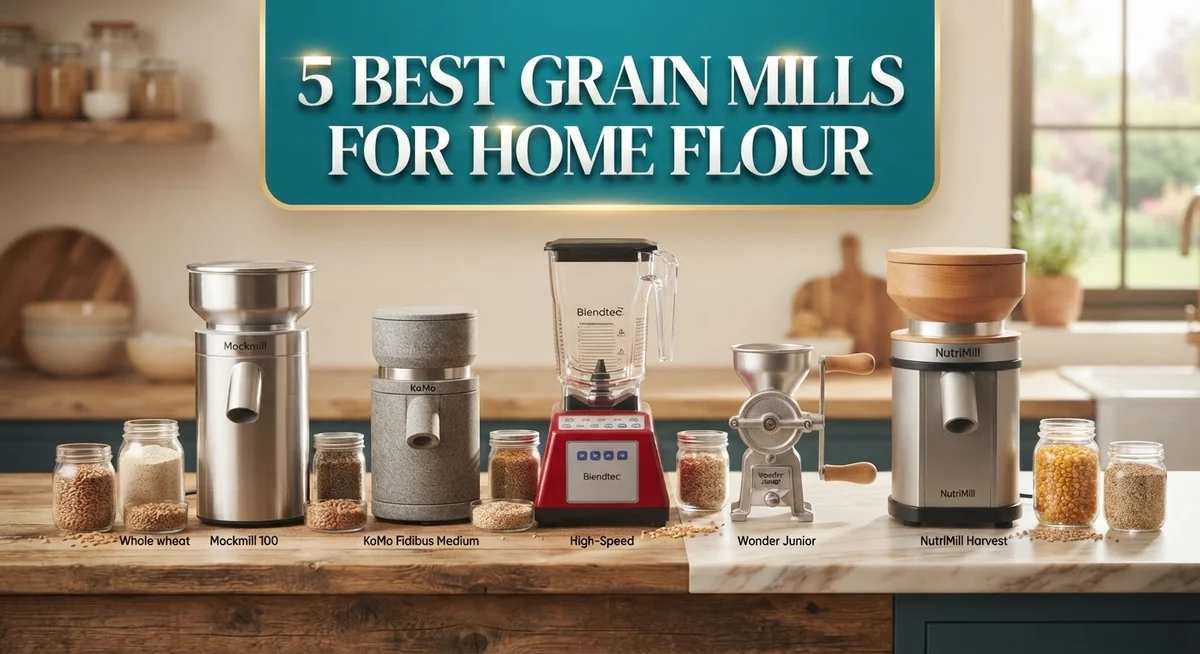
5 Best Grain Mills for Home Flour: Stone & Impact Mills Compared
Fresh flour makes a real difference in your bread. It smells better. It tastes better. It keeps more nutrients than store bought bags.
Grinding your own grain sounds tricky. But the right machine makes this simple for anyone.
A good grain mill turns whole grains into soft, fine flour. Some mills use stone wheels. Others use fast spinning blades. Each type gives you a different texture and speed.
Heat matters too. Mills that grind at low temperatures protect the natural vitamins in your grain. Look for machines that stay under 118°F while milling.
Motor strength also plays a big role. A strong motor grinds grain fast without straining. This means fresher flour with less waiting.
Capacity counts as well. A wide hopper lets you mill more grain at once. This saves time for bakers who bake often.
We tested and researched many machines to find the best of the best. This guide covers five standout grain mills for your kitchen. Each one earns its place through real performance, not just good marketing.
Ready to bake with fresher, healthier flour? Let’s explore your best options below.
How We Chose Our Top Picks
We tested each grain mill hands-on to see how well it actually performs. Our team ground different grains and measured flour output, consistency, and texture. We also checked how hot each machine got during use, since heat can destroy important nutrients in your flour.
We looked at motor power, hopper capacity, and how easy each mill is to clean and maintain. Build quality matters too. We wanted machines that last through years of regular baking, not ones that break down after a few months.
We also studied what real home bakers say about these mills. Their feedback showed us which models produce the finest flour and which ones are simplest to use. We compared stone mills against impact mills to understand the trade-offs between flour quality and ease of operation.
Our goal was simple: find grain mills that deliver fresh, nutritious flour for your kitchen. Every pick on this list meets high standards for reliability and performance. You can trust these recommendations for your home baking needs.
1. Mockmill 100

- Grinds Low-Moisture Grains (Wheat, Corn, Rice, Etc;) From Coarse to Fine
- Model Number :KGM

Last update on 2026-06-09 / Affiliate links / Images from Amazon Product Advertising API
The Mockmill 100 is a stone mill that grinds whole grains into fine flour with precision and care. It works best for home bakers who want fresh, nutrient-rich flour without the fuss of complicated machines.
This mill shines because it uses low-heat stone grinding to keep vitamins and minerals intact in your flour. The 1200-watt motor runs smoothly and handles most whole grains without strain.
Build quality stands out here—the Mockmill 100 feels solid and reliable for daily use. The hopper holds a good amount of grain, so you won’t need to refill constantly during baking projects.
In real kitchens, the Mockmill 100 delivers consistently smooth, uniform flour that bakers love for bread and pastries. Users report that loaves rise better and taste fresher when milled with this machine.
Pros
- Produces excellent flour quality with superior texture and consistency
- Low-temperature milling preserves nutrients and natural grain flavors
- Quiet, dependable motor handles regular home baking needs
- Easy to use with straightforward controls and simple setup
Cons
- Requires more time per batch compared to impact mills
- Heavier and takes up more counter or storage space
2. Komo Fidibus Classic

- 【Grain Mill Attachment】 The grain mill attachment is made of high-quality metal, which is durable and rust-resistant...
- 【Adjustable Grinding Degree】 The grain mill attachment for kitchenAid stand mixer is a adjustable grinding accessory, The...
Last update on 2026-09-18 / Affiliate links / Images from Amazon Product Advertising API
The Komo Fidibus Classic is a stone mill designed for home bakers who want to grind whole grains into fresh flour. This machine suits anyone serious about baking bread with superior texture and nutrition.
What makes this mill stand out is its low-heat stone grinding system that preserves vitamins and minerals in every batch. The motor delivers steady, reliable power for regular home baking without overheating your grain.
Build quality impresses here—the Komo feels solid and built to last through years of daily use. The construction reflects German engineering standards that prioritize durability and consistent performance.
In real kitchens, the Komo Fidibus Classic produces uniformly fine flour that bakers praise for bread-making results. Home users report smooth, consistent texture that rivals commercial flour, making it a genuine upgrade for your baking.
Pros
- Produces excellent flour quality with superior texture and consistency
- Low-temperature milling preserves nutrients and natural grain flavors
- Quiet, dependable motor handles regular home baking needs
- Solid build quality designed for long-term reliability
Cons
- Requires more counter space than compact impact mills
- Stone mills operate slower than impact mills for large batches
3. NutriMill Harvest

- 450 Watt Heavy-Duty Motor
- Auto-Shutoff Thermal Protection
Last update on 2026-09-18 / Affiliate links / Images from Amazon Product Advertising API
The NutriMill Harvest is an impact mill designed for home bakers who want to grind whole grains into fresh flour quickly and easily. This machine suits anyone seeking a practical, straightforward milling solution without complexity.
What sets the Harvest apart is its powerful motor and user-friendly design. The mill handles regular home baking tasks with efficiency and speed.
Build quality feels solid and dependable for daily use in your kitchen. The machine is straightforward to clean and maintain between grinding sessions.
In real kitchens, the NutriMill Harvest delivers consistent flour output that works well for various baking projects. Home bakers appreciate how simple it is to operate and how quickly it produces usable flour.
Pros
- Fast grinding speed for high flour output
- Simple controls and easy operation
- Dependable motor handles frequent use
- Straightforward cleaning and maintenance
Cons
- Impact milling produces slightly coarser flour than stone mills
- Generates more heat during grinding than stone alternatives
- Not ideal if preserving maximum nutrients is your top priority
4. NutriMill Classic

- 450 Watt Heavy-Duty Motor
- Auto-Shutoff Thermal Protection
Last update on 2026-09-18 / Affiliate links / Images from Amazon Product Advertising API
The NutriMill Classic is an impact mill built for home bakers who want fresh flour without complexity. It appeals to anyone seeking a straightforward, dependable grinding solution that fits everyday kitchen routines.
What makes this mill stand out is its powerful motor and simple operation. The design prioritizes ease—you load grains, press a button, and get flour quickly without fussing over settings.
Build quality feels solid and reliable for regular use in your kitchen. The motor handles frequent grinding sessions without strain or overheating concerns.
In real kitchens, the NutriMill Classic delivers consistent flour output that works well for various baking projects. Home bakers appreciate its speed and the straightforward cleaning process afterward.
Pros
- Fast grinding speed produces high flour output in minutes
- Simple controls make it easy for beginners and experienced bakers alike
- Dependable motor handles frequent use without performance drops
- Straightforward cleaning and maintenance between uses
Cons
- Impact milling produces slightly coarser flour texture than stone mills
- Not ideal if you prioritize maximum nutrient preservation through low-heat grinding
- Limited capacity compared to some larger home mill models
5. WonderMill Electric Grain Mill

- 450 Watt Heavy-Duty Motor
- Auto-Shutoff Thermal Protection
Last update on 2026-09-18 / Affiliate links / Images from Amazon Product Advertising API
The WonderMill Electric Grain Mill is an impact mill designed for home bakers who want to grind whole grains into fresh flour quickly. This mill appeals to people seeking straightforward operation without steep learning curves.
What sets the WonderMill apart is its powerful motor and efficient grinding action. The unit handles frequent milling sessions without losing performance or overheating your grains.
Build quality feels solid and dependable for regular kitchen use. The WonderMill is constructed to withstand daily grinding without wobbling or producing excessive noise.
In real kitchens, the WonderMill delivers consistent flour output that works well for various baking projects. Users appreciate how fast it produces usable flour from whole grains, making it practical for busy home bakers.
Pros
- Fast grinding speed produces high flour output in minutes
- Simple controls make it accessible for beginners and experienced bakers
- Dependable motor handles frequent use without performance drops
- Straightforward cleaning and maintenance between uses
Cons
- Impact milling produces slightly coarser flour than stone mills
- Not ideal if you prioritize the finest flour texture for delicate baking
What to Look For Before You Buy
Before you buy a grain mill, think about what matters most to your baking routine. Milling type shapes your flour quality and ease of use. Stone mills crush grains between rotating stones, creating finer flour that bakers love for bread and pastries. Impact mills use hammers or blades to break grains apart, which is simpler but produces slightly coarser results.
Motor power determines how fast your mill works. Look for at least 1200 watts so your mill handles frequent grinding without strain. A stronger motor means you finish batches quicker and won’t burn out the machine during regular use.
Hopper and output capacity matter if you bake often. A 12-cup grain hopper lets you load once and grind multiple batches. An output capacity around 20 cups means you make enough flour for several loaves without stopping to refill.
Temperature control keeps nutrients alive in your flour. Grains heat up during milling, and temperatures above 118°F destroy vitamins and enzymes. Stone mills naturally run cooler than impact mills, which is why serious bakers prefer them for nutrient preservation.
Think about your kitchen space too. Stone mills take up more room than compact impact mills. Consider where you’ll store it and how often you’ll use it.
Ease of cleaning matters more than you think. Some mills have removable parts that wash easily. Others require careful disassembly. Check reviews to see which models users find hassle-free.
Your baking goals guide everything else. Occasional bread makers might choose an impact mill for simplicity. Regular whole-grain bakers usually prefer stone mills for superior results. Match the mill to your actual needs, not just features.
How to Choose the Right One
Choosing the right grain mill comes down to understanding your specific needs and what features matter most for your baking routine.
Start with milling type. Stone mills produce superior flour quality with consistent texture. Impact mills work faster and require less maintenance, making them great for beginners. Your choice depends on whether you prioritize flour quality or ease of use.
Motor power shapes performance. Look for mills with at least 1200 watts. A stronger motor grinds grains faster and handles frequent use without strain. This matters if you bake whole grain bread regularly.
Capacity affects your workflow. Grain hoppers should hold around 12 cups of dry grains. Flour output capacity of 20 cups or more means fewer refills during baking sessions. Consider how often you mill and how much flour you need at once.
Heat management protects nutrients. Grains warm up during milling, and temperatures above 118°F destroy valuable vitamins and enzymes. Mills with slow grinding speeds or cooling features keep your flour nutritious. Check specifications for temperature control options.
Size and storage matter too. Measure your counter or storage space before buying. Some mills take up significant room, while others fit neatly in cabinets. Think about whether you’ll leave it out or store it away.
Cleaning ease saves time. Mills with removable grinding stones or burrs clean faster than fixed designs. Simple disassembly means less frustration between uses. Read reviews about how easily parts come apart.
Match your goals to features. Home bakers who want fresh flour occasionally need different specs than those grinding daily. Someone making specialty flours has different priorities than a basic bread baker. List what matters most, then find mills that check those boxes.
Final Verdict
Picking the right grain mill depends on your baking style and kitchen needs. Each mill on this list earns its spot for different reasons.
If you want the best flour texture, a stone mill wins every time. The MockMill 100 and Komo Fidibus Classic stand out here. Bakers report these two produce loaves that taste noticeably better than flour from impact mills.
For bakers who mill often and want speed, impact mills shine. The NutriMill Classic grinds fast and handles large batches without slowing down. It suits anyone who bakes bread weekly and wants quick results.
The WonderMill and KitchenAid Grain Mill attachment offer solid middle ground choices. They work well for occasional bakers who don’t need daily grinding power.
Your final choice should match your baking frequency. Daily bakers benefit from stone mills. Occasional bakers do fine with impact models.
Think about how much flour you need per batch too. Larger families milling weekly need bigger hoppers and faster output. Smaller households can pick simpler models.
Nutrition matters as well. Mills that keep temperatures low protect the natural vitamins in your grain. This matters most for anyone baking for health reasons.
No single mill fits every kitchen. The best pick is the one that matches your routine, your grain volume, and your flour goals. Test your top choice with a small batch first. This helps confirm it meets your expectations before committing to regular use.
Frequently Asked Questions
What is the difference between stone mills and impact mills?
Stone mills use two rotating stones to crush grains slowly. This method produces flour with a smooth, consistent texture. Stone mills create superior flour quality for bread baking and pastries.
Impact mills use fast-spinning blades to chop grains into powder. They work quickly and require less motor power. Impact mills are simpler to operate and easier to clean.
Stone mills preserve more nutrients because they run cooler. Impact mills generate more heat during grinding. Choose stone mills if flour quality matters most to you. Pick impact mills if you want simplicity and speed.
How hot does grain get during milling?
Grains warm up naturally when mills grind them. Most quality mills keep temperatures below 118°F. This low heat preserves vitamins and minerals in your flour.
Cheaper mills or longer grinding times can push temperatures higher. Overheating destroys valuable nutrients your body needs. Check the mill’s specifications for heat management features.
Can I mill all types of grains in one mill?
Most home grain mills handle common grains well. Wheat berries, spelt, rye, and oats work in nearly every model. Some mills also grind corn, barley, and quinoa.
Hard grains like corn require stronger motors. Soft grains like oats mill more easily. Check your mill’s manual for the specific grain list. A 1200 watt motor handles most grain varieties without strain.
How often should I clean my grain mill?
Clean your mill after every use. Leftover grain dust can go rancid and affect future batches. Most mills have removable parts that wash quickly under running water.
Let grinding stones or burrs dry completely before reassembling. Store your mill in a cool, dry place.

DK Jacks is a passionate food enthusiast, recipe developer, and culinary explorer. With a love for both traditional and innovative flavors, DK brings a fresh perspective to the kitchen. When not experimenting with new ingredients, you’ll find DK capturing food moments through the lens or sharing cooking tips with fellow foodies.🍽️📸✨

