11 Almond Flour Substitutes for Gluten-Free Baking
When you’re looking to create gluten-free treats, you might turn to almond flour as a reliable option. But what if you’re on a budget or need to accommodate nut allergies? You’re not alone in seeking alternatives.
As you explore the world of gluten-free baking, you’ll find that there are several substitutes that can replicate the texture and flavor of almond flour.
From nutty hazelnut flour to cost-effective oat flour, each option comes with its unique benefits and challenges. But which ones are worth trying, and how can you make the most of them in your recipes?
At a Glance
- Hazelnut flour offers a rich, nutty flavor and high fat content, making it an excellent substitute for almond flour in gluten-free baking.
- Sunflower seed flour adds texture and flavor to sweet and savory recipes, providing a nutritious alternative with high protein and healthy fat content.
- Oat flour is a popular, cost-effective substitute for almond flour, but requires adjustments to liquid content and ratio due to its coarser texture.
- Teff flour brings high protein content and a nutty flavor, making it an excellent option for increasing nutritional value in gluten-free baked goods.
- Coconut flour requires adjustments to liquid content and binding agents due to its high fiber and protein content, making it a nutritious but finicky substitute.
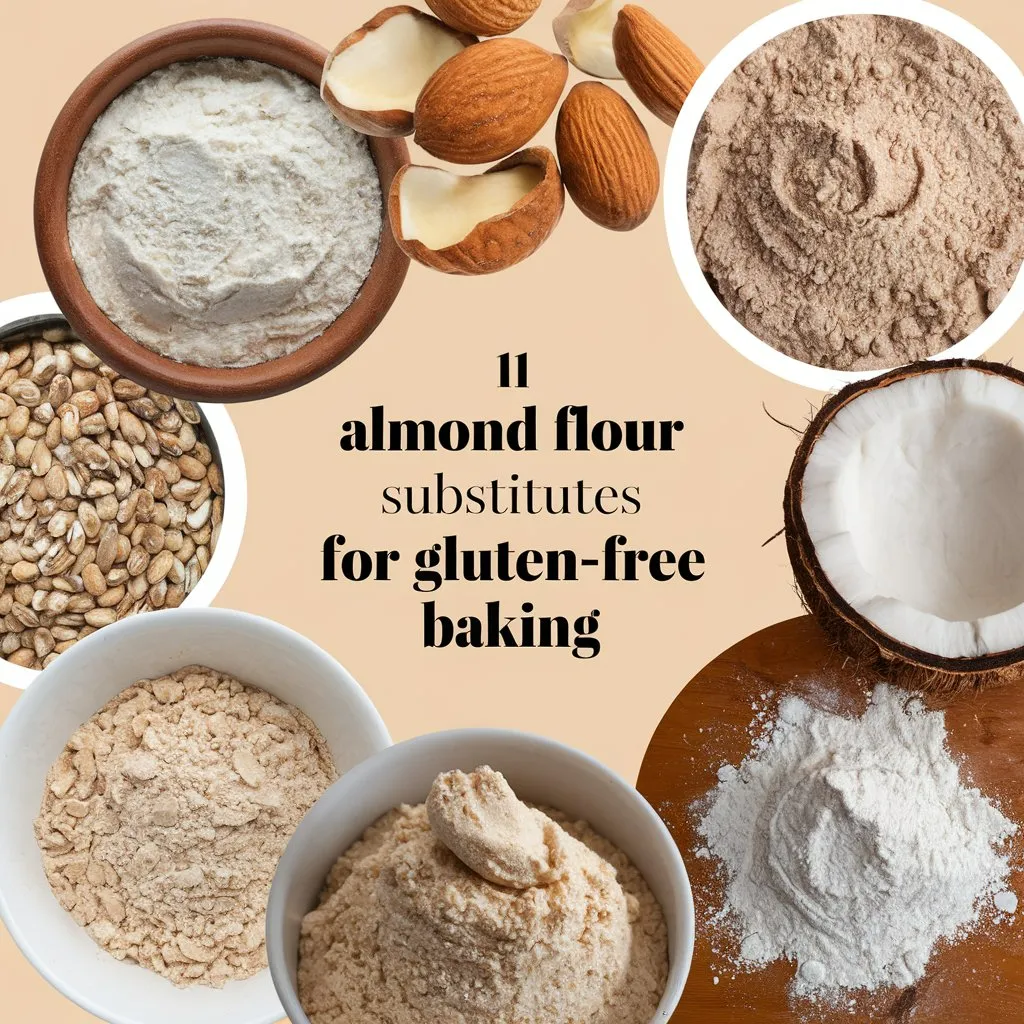
Coconut Flour in Gluten-Free Baking
In the domain of gluten-free baking, coconut flour emerges as a popular substitute for almond flour, particularly among health-conscious bakers.
You may wonder why coconut flour is gaining traction, and the answer lies in its unique properties. With a higher fiber and protein content than almond flour, coconut flour offers a nutritious alternative for those looking to reduce their carbohydrate intake.
When substituting almond flour with coconut flour, you’ll need to adjust the ratio. A general rule of thumb is to use 1/4 cup of coconut flour for every 1 cup of almond flour called for in the recipe.
This coconut flour ratio is vital, as coconut flour absorbs more liquid than almond flour. To guarantee the best results, make sure to increase the liquid content in your recipe accordingly.
Coconut flour conversion can be a bit tricky, but with practice, you’ll get the hang of it.
Remember to also adjust the binding agents, like eggs or flaxseed, to compensate for coconut flour’s high fiber content.
Oat Flour as Almond Flour Alternative
You’re considering oat flour as an almond flour substitute, and that’s a great choice. Oat flour is a popular alternative for those who want to avoid nuts or are looking for a more cost-effective option.
When substituting oat flour for almond flour, keep in mind that oat flour has a coarser texture and a nuttier flavor. This means you may need to adjust the ratio of oat flour to other ingredients in your recipe.
A general rule of thumb is to use 1 1/4 cups of oat flour for every 1 cup of almond flour called for in the recipe. This oat flour ratio will help you achieve the right texture and consistency.
Additionally, you may need to adjust the liquid content in your recipe, as oat flour absorbs more liquid than almond flour. When making the oat flour conversion, start by adding an extra 1-2 tablespoons of liquid and adjust as needed.
With these adjustments, oat flour can be a great substitute for almond flour in many gluten-free baked goods. Just remember to choose rolled oats or gluten-free oats to guarantee your final product is gluten-free.
Cassava Flour for Neutral Flavor
By the time you’re exploring alternatives to almond flour, you’ve likely considered the popular options, but cassava flour may not be on your radar yet.
This gluten-free flour, derived from the root of the cassava plant, offers a neutral flavor profile that won’t overpower your baked goods. Cassava flour benefits include being free from common allergens, low in calories, and rich in fiber and minerals.
Its neutral taste and odor make it an excellent substitute for almond flour in recipes where you don’t want a nutty flavor dominating the scene.
When substituting cassava flour for almond flour, keep in mind that it has a slightly denser texture and may require adjustments to liquid content.
Start by replacing 25% of the almond flour with cassava flour and adjust as needed. Cassava flour is an excellent choice for delicate baked goods, such as cakes, cookies, and pastries, where a light, tender texture is desired.
Its neutral flavor profile allows the natural flavors of your ingredients to shine, making it an excellent addition to your gluten-free baking arsenal.
Banana Flour for Moist Treats
Banana flour, made from ripe bananas, offers a unique advantage in the domain of almond flour substitutes: it adds natural sweetness and moisture to your baked goods.
This makes it an excellent choice for treats that require a tender crumb and a hint of sweetness. When you use banana flour, you can reduce the amount of sugar in your recipe, as the natural sugars from the ripe bananas will shine through.
Additionally, banana flour’s high pectin content helps to bind ingredients together, creating a moist and tender texture.
To get the most out of banana flour, use it in recipes that feature a fresh banana as a primary ingredient, such as banana bread or muffins.
You’ll find that the flavor of the ripe bananas is enhanced, creating a deliciously moist and flavorful treat.
With banana flour, you can create gluten-free baked goods that aren’t only delicious but also packed with nutrients.
Gluten-Free Rice Flour Blends
Your recipe’s texture and structure can greatly benefit from gluten-free rice flour blends, which offer a delicate balance of ingredients tailored to mimic the binding properties of gluten.
These blends typically combine rice flour with other gluten-free ingredients, such as potato starch, tapioca flour, or cornstarch, to achieve a harmonious balance of texture and structure.
When using gluten-free rice flour blends, vital attention must be paid to getting the rice flour ratio just right. A general rule of thumb is to use a 1:1 ratio of rice flour to other gluten-free flours. However, this can vary depending on the specific blend and recipe.
Flour blending techniques also play a pivotal role in achieving the perfect texture. You’ll want to sift and whisk the flours together to confirm they’re evenly distributed and aerated.
Teff Flour for Nutty Flavor
As you explore alternative flours, teff flour emerges as a standout option for those seeking a nutty flavor profile in their baked goods.
This ancient grain, native to Ethiopia, is packed with nutrients and offers numerous benefits for gluten-free bakers.
Teff flour’s unique characteristics make it an excellent substitute for almond flour in many recipes.
- High protein content: Teff flour contains up to 7% protein, making it an excellent option for those looking to increase the nutritional value of their baked goods.
- Gluten-free and hypoallergenic: Teff flour is naturally gluten-free and hypoallergenic, making it an ideal choice for those with dietary restrictions.
- Versatile flavor profile: Teff flour’s nutty flavor pairs well with a variety of ingredients, making it a great addition to Ethiopian recipes, such as injera bread, and other sweet and savory treats.
When substituting teff flour for almond flour, keep in mind that teff has a slightly denser texture and stronger flavor.
Start by replacing up to 25% of the almond flour with teff flour and adjust to taste.
Hazelnut Flour for Rich Aroma
As you continue to explore the world of nut flours, hazelnut flour emerges as a prime candidate to add depth and richness to your baked goods.
With its distinct, nutty flavor and aroma, hazelnut flour can elevate your gluten-free baking to new heights.
One of the hazelnut benefits is its high fat content, which contributes to a moist and tender crumb in your baked goods.
To get the most out of hazelnut flour, it is vital to use high-quality, roasted hazelnuts as the base.
Roasting enhances the natural flavor and aroma of the hazelnuts, which translates to a more robust and complex flavor profile in your baked goods.
When substituting hazelnut flour for almond flour, keep in mind that hazelnut flour has a slightly coarser texture and a stronger flavor.
Start by replacing up to 25% of the almond flour with hazelnut flour and adjust to taste.
With its rich, nutty flavor and aroma, hazelnut flour is an excellent addition to your gluten-free baking repertoire.
Sunflower Seed Flour for Crunch
Beyond nuts, sunflower seeds offer a unique alternative for adding crunch and nutrition to your gluten-free baked goods.
Sunflower seed flour is a great option for those looking to add texture and flavor to their baked goods. The seed texture is coarser than nut flours, providing a delightful crunch that complements a variety of sweet and savory recipes.
- Crunchy toppings: Use sunflower seed flour as a topping for muffins, cakes, or breads to add a satisfying crunch and nutty flavor.
- Seed-based granola: Mix sunflower seed flour with other seeds and nuts to create a crunchy granola perfect for snacking or as a topping for yogurt or oatmeal.
- Crunchy cookie bases: Use sunflower seed flour as a base for cookies, providing a crunchy texture that pairs well with sweet or savory flavors.
Pumpkin Seed Flour for Nutritious Bakes
With its nutty flavor and high nutritional value, pumpkin seed flour is an excellent substitute for almond flour in gluten-free baked goods.
You’ll enjoy the benefits of pumpkin seeds, including their high protein and healthy fat content, which can help keep you full and satisfied. Additionally, pumpkin seed flour is rich in antioxidants, zinc, and magnesium, making it a nutritious addition to your baked goods.
When substituting pumpkin seed flour for almond flour, keep in mind that you may need to make some adjustments to your recipe.
Pumpkin seed flour tends to absorb more liquid than almond flour, so you may need to add a little more egg or oil to achieve the right consistency. Start by replacing 25% of the almond flour with pumpkin seed flour and adjust the ratio from there.
You may also need to reduce the sugar content of your recipe, as pumpkin seed flour has a naturally sweet flavor. With a little experimentation, you can create delicious and nutritious gluten-free baked goods using pumpkin seed flour.
Chickpea Flour for High-Protein Treats
You’re looking for a gluten-free flour substitute that packs a protein punch. Chickpea flour is an excellent option, boasting a higher protein content than almond flour.
This makes it perfect for creating high-protein treats that cater to fitness enthusiasts and health-conscious individuals.
When using chickpea flour, you’ll need to make protein ratio adjustments to achieve the right balance.
- Blend with other flours: Combine chickpea flour with other gluten-free flours to create a blend that suits your recipe. This helps to balance out the protein content and texture.
- Adjust liquid content: Chickpea flour absorbs more liquid than almond flour, so be prepared to increase the liquid content in your recipe.
- Mind the flavor profile: Chickpea flour has a nutty, slightly sweet flavor that may affect the overall taste of your baked goods.
Potato Starch for Light Texture
When substituting almond flour, incorporating potato starch into your recipe can be a game-changer for achieving a light, airy texture.
You’ll find that potato starch absorbs excess moisture, allowing your baked goods to retain their structure and stay tender. To get the best results, use a potato starch ratio of 1:4 with your gluten-free flours.
For example, if a recipe calls for 1 cup of almond flour, you can replace 1/4 cup with potato starch.
When choosing a potato starch brand, look for ones that are finely milled and gluten-free.
Some popular brands include Bob’s Red Mill and Anthony’s. Avoid using potato flour, as it has a different texture and nutritional profile compared to potato starch.
By incorporating potato starch into your gluten-free baking, you’ll be able to create delicate, crumbly textures that are perfect for cakes, cookies, and pastries.
With the right ratio and brand, you’ll be on your way to baking gluten-free treats that are both delicious and visually appealing.
FAQs
Can I Mix Different Flours to Create a Custom Blend?
You can definitely mix different flours to create a custom blend, but it’s essential to experiment with flour ratios and master blending techniques to achieve the perfect combination that suits your gluten-free baking needs.
Do Almond Flour Substitutes Affect Baking Time and Temperature?
When you experiment with flour ratios, you’ll notice that substitutes can alter baking time and temperature; be prepared to make texture adjustments, as some flours absorb more liquid or cook faster than others, affecting your final product’s consistency and flavor.
Are All Gluten-Free Flours Suitable for Yeast-Based Recipes?
You’ll find that not all gluten-free flours are suitable for yeast-based recipes, as yeast sensitivity and gluten interactions can be complex; some flours may inhibit yeast activity or produce unpleasant textures, so crucially, you must select flours that are yeast-friendly and carefully balanced.
Can I Use Gluten-Free Flours to Make Savory Dishes, Not Just Sweet?
You can create amazing savory dishes using gluten-free flours, experimenting with flavor profiles to craft unique savory twists. Don’t be limited to sweet treats; explore the world of gluten-free flavors and surprise your taste buds with bold, new recipes.
Will Almond Flour Substitutes Change the Color of My Baked Goods?
When you swap out almond flour, you’ll notice a difference in your baked goods’ color, but it’s not just about aesthetics – the substitute will also alter the flavor profile and texture impact, so choose wisely to achieve the desired outcome.





DK Jacks is a passionate food enthusiast, recipe developer, and culinary explorer. With a love for both traditional and innovative flavors, DK brings a fresh perspective to the kitchen. When not experimenting with new ingredients, you’ll find DK capturing food moments through the lens or sharing cooking tips with fellow foodies.🍽️📸✨