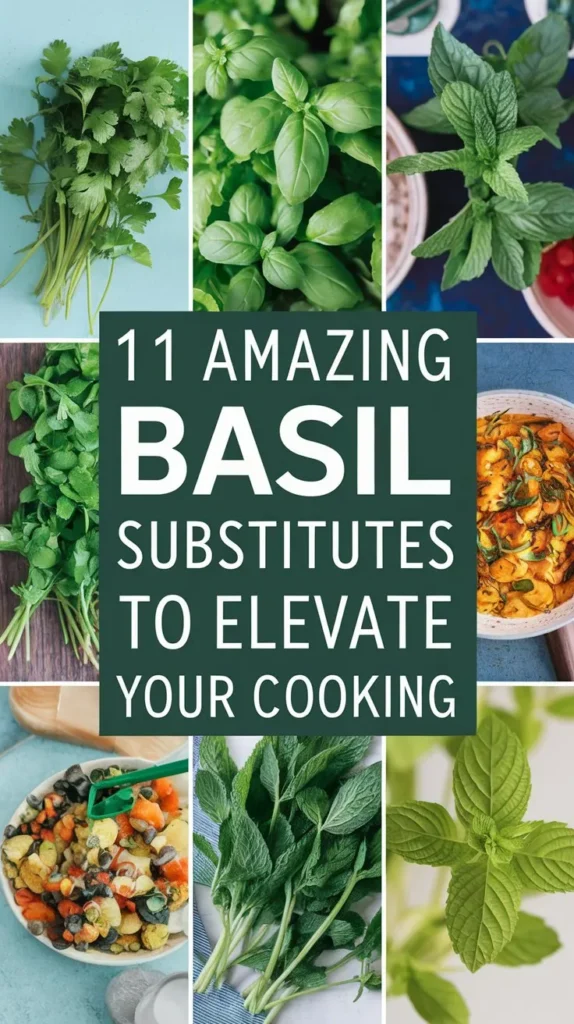
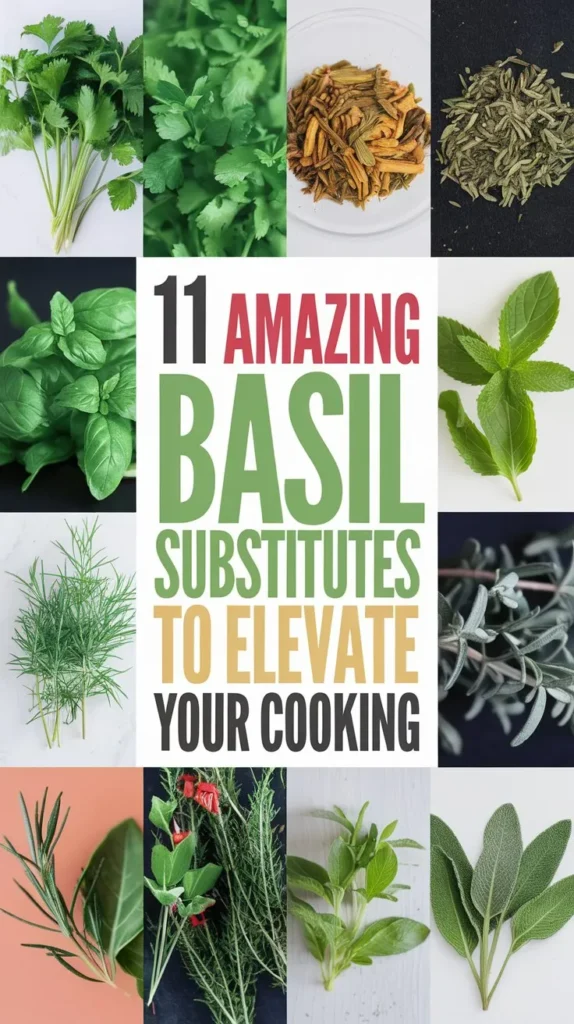
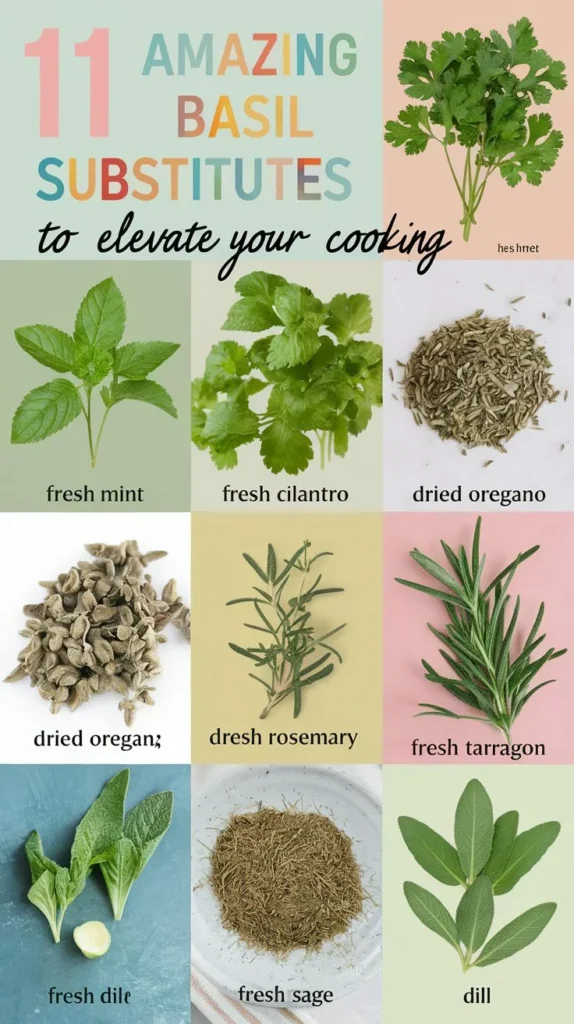
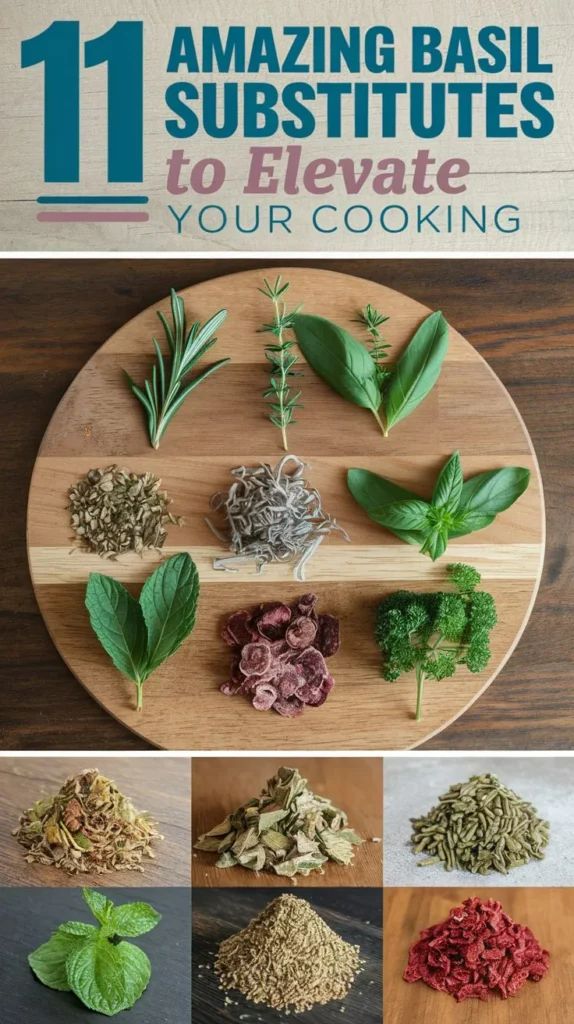
11 Amazing Basil Substitutes to Elevate Your Cooking
When you’re cooking up a storm and realize you’re out of basil, don’t panic! You’ve got options. From oregano’s bold flavor to cilantro’s citrusy kick, there are plenty of herbs that can step in and elevate your dishes. But which ones will work best in your recipe?
Will you opt for the familiar taste of spinach or the unique twist of tarragon? The possibilities are endless, and the right choice can make all the difference. So, what’s the perfect basil substitute for your next culinary creation?
At a Glance

- Oregano’s pungent flavor makes it a great substitute for basil in many recipes, especially pasta sauces and salad dressings.
- Cilantro’s bright, citrusy flavor adds a unique twist to dishes, making it an excellent substitute for basil in many recipes.
- Spinach’s mild flavor won’t overpower other ingredients, allowing for experimentation with different flavor combinations and making it a great basil substitute.
- Tarragon’s anise-like flavor profile makes it a unique addition to many dishes, and its versatility allows it to pair well with a variety of ingredients.
- Marjoram’s sweet and piney aroma sets it apart from other herbs, making it a great substitute for basil in soups, stews, and sauces.
Oregano: The Pungent Basil Alternative
Oregano’s pungent flavor profile makes it an excellent substitute for basil in many recipes.
You’ll find that oregano’s earthy, slightly bitter taste complements a variety of dishes, from pasta sauces to salad dressings. But oregano’s benefits go beyond its flavor.
This herb has a rich history, dating back to ancient Greece, where it was used for its medicinal properties. Today, oregano is prized for its antioxidant and anti-inflammatory benefits, making it a healthy addition to your meals.
When substituting oregano for basil, keep in mind that oregano is more potent, so start with a smaller amount and adjust to taste.
You can also combine oregano with other herbs, like thyme or rosemary, to create a unique flavor profile. Oregano’s versatility and health benefits make it an excellent choice for cooks looking to elevate their dishes.
Spinach: Mild Flavor and Nutrition
Spin into action with spinach, a mild-flavored superfood that’s packed with nutrients.
When you substitute basil with spinach, you’ll not only add a burst of freshness but also reap its numerous health benefits. Spinach nutrition benefits include being rich in iron, calcium, and vitamins A and K. It’s also low in calories and high in fiber, making it an excellent addition to your meals.
To bring out the best in spinach, master these spinach cooking techniques: sauté it with garlic as a side dish, add it to soups and stews for an extra nutritional boost, or blend it into smoothies for a vibrant green color.
You can also use it as a basil substitute in pesto recipes or as a bed for grilled meats or fish. Spinach’s mild flavor won’t overpower other ingredients, allowing you to experiment with different flavor combinations.
With its versatility and nutritional profile, spinach is an excellent basil substitute that will elevate your cooking and nourish your body.
Thai Basil’s Indian Cousin: Tulsi
In Indian cuisine, tulsi, also known as holy basil, serves as a flavorful and aromatic substitute for Thai basil.
You’ll find that tulsi’s pungent flavor profile is slightly sweeter and more delicate than Thai basil, making it a great addition to curries, soups, and stews.
Beyond its culinary uses, tulsi boasts impressive medicinal benefits.
It’s rich in antioxidants and has been shown to reduce inflammation, improve respiratory health, and even combat stress.
In Ayurvedic tradition, tulsi is revered for its ability to balance the body’s energies and promote overall well-being.
When substituting tulsi for Thai basil, use it in similar proportions, but be mindful of its more delicate flavor.
You can also combine tulsi with other herbs to create unique blends that showcase its distinct character.
With its rich history, medicinal benefits, and Ayurvedic significance, tulsi is an excellent addition to any spice rack or herb garden.
Cilantro’s Fresh and Citrusy Zing
As you explore alternatives to Thai basil, you may find yourself drawn to cilantro’s bright, citrusy flavor profile.
This herb, also known as coriander, is commonly used in Mexican, Indian, and Asian cuisine.
Cilantro’s fresh flavors and citrusy accents can add a unique twist to your dishes, making it an excellent substitute for basil in many recipes.
Some key benefits of using cilantro as a basil substitute include:
- Its citrusy notes can enhance the brightness of other ingredients in your dish
- It pairs well with spicy and sour flavors, making it ideal for Asian-inspired recipes
- Cilantro is relatively inexpensive and widely available in most supermarkets
- It can be used in both raw and cooked applications, offering versatility in your cooking
When substituting cilantro for basil, keep in mind that it has a stronger flavor, so start with a smaller amount and adjust to taste.
Additionally, cilantro’s flavor profile can be quite different from basil’s, so be prepared to adapt your recipe accordingly.
Parsley’s Delicate yet Potent Flavor
Fresh parsley leaves unfurl a delicate yet potent flavor profile that can elevate your dishes in unexpected ways.
You might be surprised at how this often-overlooked herb can add depth and nuance to your cooking. As a basil substitute, parsley brings a bright, green flavor that complements a variety of ingredients.
Try using it as a fresh garnish for soups, salads, or pasta dishes to add a pop of color and flavor. You can also incorporate parsley into flavorful infusions, such as sauces, marinades, or dressings, to add an extra layer of complexity.
When substituting parsley for basil, keep in mind that parsley has a milder flavor, so you may need to use a bit more to achieve the desired taste.
With its delicate yet potent flavor profile, parsley is an excellent addition to your culinary arsenal. By experimenting with parsley in different recipes, you’ll discover new ways to add freshness and excitement to your cooking.
Dill Weed: Brightening Up Dishes
You’ll find that dill weed’s bright, airy flavor provides an invigorating contrast to parsley’s deeper, earthier notes.
This substitution is particularly effective in dishes where a lighter, more revitalizing flavor is desired. Dill weed’s versatility allows it to pair well with a variety of ingredients, making it an excellent addition to many recipes.
Some popular ways to incorporate dill weed into your cooking include:
- Adding it to pickling brines for a burst of fresh flavor
- Using it to garnish soups, salads, and other dishes for a pop of color and flavor
- Mixing it with yogurt or sour cream for a tasty dip or sauce
- Incorporating it into marinades for fish, chicken, or vegetables to add depth and brightness
When working with dill weed, keep in mind that there are several variations to choose from, each with its own unique characteristics.
For example, some dill varieties have a more delicate flavor, while others are more robust.
Experimenting with different dill variations can help you find the perfect fit for your recipes and personal taste preferences.
Chives: Oniony Flavor in a Pinch
Three times more oniony than scallions, chives pack a pungent punch that can elevate dishes in a pinch.
You can use them to add a subtle onion flavor to soups, salads, and sauces without overpowering other ingredients. Chives are a great addition to herb butters, like Chive Butter Benefits, which can be spread on bread or used as a finishing touch for vegetables and meats.
When you’re looking for a basil substitute in pesto, chives can be a great option.
Try making a Chive Pesto Recipe by blending chives with garlic, pine nuts, Parmesan cheese, and olive oil. This vibrant green sauce is perfect for pasta, pizza, and as a dip for vegetables.
Chives are also an excellent garnish for soups, salads, and entrees, adding a pop of color and flavor to any dish.
With their mild onion flavor and versatility, chives are an excellent addition to any kitchen. They can help you create complex flavors and elevate your cooking to the next level.
Tarragon: Anise-Like Flavor Profile
Tarragon’s anise-like flavor profile makes it a unique addition to many dishes, and its versatility allows it to pair well with a variety of ingredients.
When you’re looking for a substitute for basil, tarragon’s distinct flavor can add a new dimension to your cooking.
You can use tarragon in a variety of dishes, including:
- Chicken and fish recipes, where its anise flavor complements delicate proteins
- Soups and stews, where it adds depth and warmth
- Salad dressings and marinades, where its flavor enhances other herbs
- Vegetarian dishes, where it pairs well with ingredients like eggplant and zucchini
As an anise spice substitute, tarragon flavor profile is particularly useful in dishes where you want to add a subtle licorice flavor without overpowering other ingredients.
With its unique flavor profile, tarragon is an excellent addition to your herb collection, and its versatility makes it a great basil substitute in many recipes.
Marjoram: Sweet and Piney Aroma
Marjoram: Sweet and Piney Aroma
One key characteristic of marjoram is its sweet and piney aroma, which sets it apart from other herbs and makes it an attractive substitute for basil in many recipes.
You’ll notice that marjoram’s flavor profiles are often described as mild, earthy, and slightly bitter, with a hint of sweetness.
These qualities make it an excellent addition to soups, stews, and braises, where it can add depth and warmth without overpowering other flavors.
When pairing marjoram with other herbs, you’ll find that it complements thyme, rosemary, and oregano nicely, creating a harmonious blend of earthy and piney notes.
Marjoram herb pairings also work well with lemon, garlic, and olive oil, making it a great choice for Mediterranean-inspired dishes.
As you experiment with marjoram, you may find that it’s particularly well-suited to roasted meats, vegetables, and legumes, where its subtle flavor can enhance without overpowering.
Lemon Balm: Uplifting and Refreshing
Most herb enthusiasts will agree that lemon balm’s bright, citrusy flavor profile makes it an excellent substitute for basil in many recipes, particularly those that require a revitalizing twist.
You’ll find that lemon balm adds a unique charm to your dishes, especially when used in desserts like lemon balm panna cotta or lemon balm ice cream.
When you incorporate lemon balm into your cooking, you’ll discover new dimensions of flavor.
- Add fresh lemon balm leaves to your favorite tea blend for a calming, citrusy brew
- Use lemon balm as a garnish for cocktails or sparkling water for an invigorating twist
- Infuse lemon balm into olive oil or vinegar for a flavorful condiment
- Create a lemon balm syrup to drizzle over pancakes, waffles, or ice cream
Lemon balm is a versatile herb that can elevate your cooking in many ways.
Shiso: The Asian Basil Substitute
Two Asian herbs, Shiso and Thai basil, are often considered interchangeable in many recipes, but Shiso stands out as a unique and flavorful substitute for basil in its own right.
You’ll find that Shiso’s distinct aroma and taste, which are often described as a mix of mint, basil, and anise, add a new dimension to your dishes.
There are several Shiso varieties, including Akajiso (red Shiso) and Ajiso (green Shiso), each with its own subtle nuances.
When it comes to Shiso cultivation, you’ll need to provide it with well-drained soil and partial shade.
Shiso is a hardy herb that can thrive in a variety of conditions, making it an excellent choice for gardeners of all levels.
As you experiment with Shiso in your recipes, you’ll discover its versatility and ability to elevate a wide range of dishes, from salads and soups to stir-fries and sauces.
FAQs
Can I Use Dried Herbs as Substitutes for Fresh Basil?
You can use dried herbs, but they’ll lack fresh basil’s vibrancy; instead, explore fresh alternatives to replicate its flavor profile, as dried herbs often have a more muted, bitter taste that may alter your dish’s overall character.
Are Basil Substitutes Suitable for People With Allergies?
You’re right to wonder if basil substitutes are safe for those with allergies; some alternatives can trigger immune responses, so it’s vital to identify allergy triggers and choose substitutes wisely to avoid adverse reactions.
Do Basil Substitutes Have the Same Nutritional Value?
You wonder if basil substitutes match the nutritional value of the real deal. Comparing basil varieties, you’ll find some substitutes, like Thai basil, have similar flavor profiles and nutrients, but others, like spinach, may lack certain vitamins and minerals.
Can I Mix and Match Different Basil Substitutes in Recipes?
You’re wondering if you can mix and match different basil substitutes in recipes. Yes, you can, but be mindful of flavor profiles and basil ratios to achieve the desired taste, as combining substitutes can alter the overall flavor experience.
Will Basil Substitutes Change the Cooking Time of My Dish?
When you swap basil with substitutes, you’ll likely adjust cooking times based on their flavor profile and your chosen cooking technique. You’ll need to monitor doneness closely, as some subs can be more delicate or robust than traditional basil, affecting your dish’s overall cooking time.








DK Jacks is a passionate food enthusiast, recipe developer, and culinary explorer. With a love for both traditional and innovative flavors, DK brings a fresh perspective to the kitchen. When not experimenting with new ingredients, you’ll find DK capturing food moments through the lens or sharing cooking tips with fellow foodies.🍽️📸✨