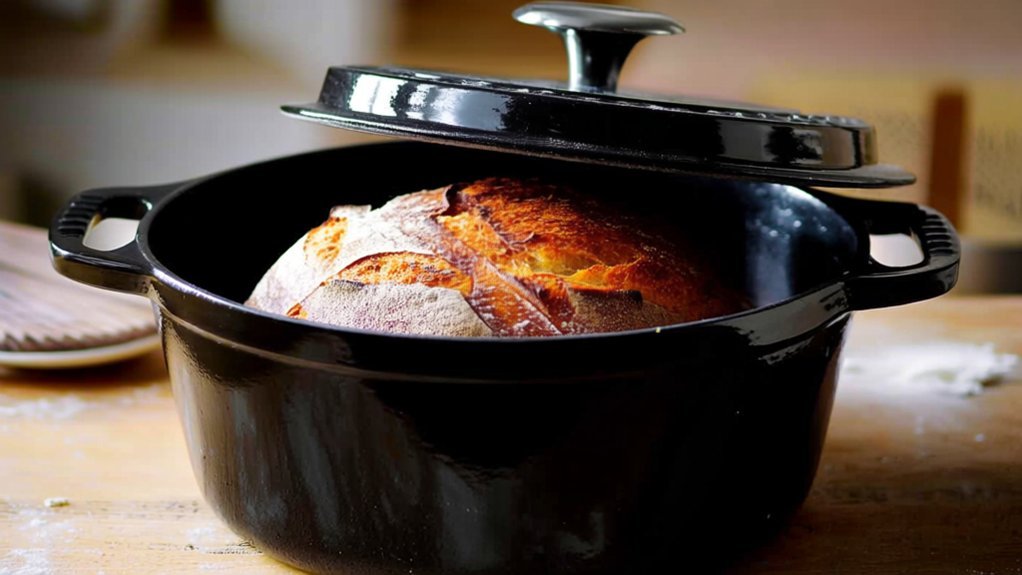
1 Best Dutch Ovens for Baking Sourdough Bread in 2026
When it comes to baking perfect sourdough in 2026, choosing the right Dutch oven makes all the difference. You’ll want a piece that evenly distributes heat—ensuring that crust gets just right—while remaining sturdy enough to last for years. From size to lid design, each feature impacts your results, and with so many options claiming to be the best, it’s easy to get overwhelmed. The secret to consistent, bakery-quality bread could be hiding in your next purchase.
Enameled Cast Iron Dutch Oven for Sourdough Baking

- 【Premium Enameled Cast Iron】 Crafted with high-quality enamel-coated cast iron, this bread baking pan delivers superior...
- 【Versatile Baking & Cooking】 Enameled cast iron bread oven Ideal for artisan sourdough, sandwich loaves, baguettes, or...
Last update on 2026-06-09 / Affiliate links / Images from Amazon Product Advertising API
If you love baking sourdough bread with a crunchy crust, an enameled cast iron Dutch oven can help you do it. It’s made from heavy cast iron, and has a smooth, shiny enamel finish. This makes it good at holding heat evenly, which helps your bread get that perfect crust. The enamel coating also stops rust and doesn’t need re-seasoning. That means you won’t spend time messing with oil or trying to keep it in good shape. The inside is pre-seasoned, so your bread comes out easy and doesn’t stick. These Dutch ovens often come in nice colors like Sage Green or Ocean Blue, so they look good in your kitchen too.
Best For: home bakers and cooks who want a sturdy, stylish, and reliable Dutch oven for sourdough and other kitchen dishes.
Pros:
- Keeps heat steady so your bread bakes evenly
- Looks nice with colors that brighten up your kitchen
- Easy to clean and doesn’t need re-seasoning
Cons:
- It’s heavy, so lifting might be hard for some
- Not dishwasher safe, so you need to wash by hand
- Bigger size might not fit in small kitchens or cabinets
This Dutch oven makes baking easier and more fun. Its strong heat retention helps you get bread with a crunchy crust every time. Plus, it looks good sitting on your stove or shelf. Just remember, it’s heavy and needs gentle cleaning. But if you want a reliable and attractive tool for baking bread or cooking other meals, it’s a great choice.
Factors to Consider When Choosing Dutch Ovens for Baking Sourdough Bread
When choosing a Dutch oven for baking sourdough, you’ll want to take into account factors like material durability and heat retention—because nobody wants a cookware fail mid-bake. Size and capacity matter too; a too-small pot might cramp your loaf’s expansion, while a giant one could make handling a chore. Finally, ease of cleaning and oven compatibility guarantee your baking process stays smooth and stress-free, so your focus stays on those perfect crusts.
Material Durability and Quality
When choosing a Dutch oven for baking sourdough bread, it’s important to think about how strong and durable the material is. You want something that can be used many times without breaking or warping. Cast iron is a great choice because it’s very sturdy. It keeps heat well and can handle hot oven temperatures above 500°F. Enameled cast iron adds a layer of protection so it won’t rust or get damaged easily. The thickness of the material also matters because it helps the heat spread evenly and stops the oven from warping over time. A well-made Dutch oven won’t chip, crack, or stain easily. This helps it stay in good shape even after many bakes.
Heat Retention Efficiency
Getting a great sourdough crust depends a lot on how well your Dutch oven keeps heat. Thick, cast iron Dutch ovens do a good job of holding heat. They spread heat evenly, which helps your bread bake nicely all over. When you preheat the Dutch oven well, it traps enough heat to form a nice, crunchy crust. Think of it like wrapping your bread in a warm blanket.
Enamel-coated Dutch ovens also help. They transfer heat well and don’t have hot spots that can burn or unevenly cook your bread. Preheating the Dutch oven and seasoning it keeps the heat steady. This prevents temperature dips that can stop the crust from forming properly.
If your Dutch oven keeps heat like a champion, your sourdough will turn out with a deep, caramel-colored crust that is crispy and delicious.
Size and Capacity
Choosing the right size for your Dutch oven is important for baking good sourdough bread. If you’re making a small loaf or trying things out, a Dutch oven that holds about 1.5 to 2 quarts works well. These sizes are good for one loaf or quick experiments.
If you want to bake bigger loaves or make more bread at once, look for a Dutch oven that holds 4 quarts or more. These bigger ones can fit larger dough and make multiple servings easy.
Pay attention to the size and shape of the Dutch oven. The diameter and height matter because they affect how easy it is to handle and how much dough you can put inside. Too much dough can overflow or stick to the sides.
Larger Dutch ovens need more heat and take longer to preheat. This can use more energy and change how long baking takes.
Pick a size that matches your usual bread recipe. This makes baking simpler, and you won’t worry about fitting the dough or wasting time. Choosing the right size helps you bake better bread and makes the process more fun.
Ease of Cleaning
When you pick a Dutch oven for baking sourdough bread, how easy it is to clean is an important thing to think about. Enamel-coated Dutch ovens are simple to clean because their smooth, non-stick surface keeps food from sticking or staining. This makes cleaning quick and simple. Unlike traditional cast iron, you don’t need to season or do special maintenance.
To keep the surface nice, use gentle soap and a soft sponge. Avoid harsh scrubs or abrasives because they can scratch or damage the finish. If you want less mess after baking, put parchment paper inside the pot. This keeps residues from sticking directly to the surface and makes cleanup faster.
Compatibility With Ovens
Make sure your Dutch oven can handle the heat of sourdough baking. Most recipes ask for temperatures up to 500°F or even higher. Check that your Dutch oven is oven-safe at these hot temperatures. Cast iron and enameled cast iron pots usually can take the heat. But some materials might crack when they get too hot fast, so be careful. Also, see if the size and shape of your Dutch oven fit well in your oven. You don’t want to struggle to fit a big pot inside. Proper air flow helps your bread bake evenly. Look for a lid that seals tight to trap steam. This helps form a nice crust. Finally, make sure the handle and lid are easy and safe to use, no matter what type of oven you have—gas, electric, or convection.
Style and Color Options
Your Dutch oven isn’t just meant to cook well. It should also look nice. Luckily, they come in many colors and finishes. You can choose bright reds, soft blues, or neutral greys. These colors help match your kitchen decor.
Enamel-coated Dutch ovens have a shiny, smooth surface. They resist chipping and fading. This keeps your cookware looking new even after many uses. Some styles have special patterns, like two-tone or gradient colors. They add a fun and stylish touch to your collection.
Picking a color that fits your kitchen makes baking more fun. Imagine pulling out a beautiful Dutch oven that looks good and makes you happy. A nice-looking pot can make cooking more enjoyable. After all, how things look matters — even in the kitchen.
Handle Comfort and Safety
Handles might look small, but they are very important. They help you lift and move your Dutch oven safely. When it’s full of hot, freshly baked bread, handles give you a good grip. Look for handles that stay secure and help you avoid hand tiredness. This way, you won’t feel strained or look like you’ve wrestled a bear! Handles made from heat-resistant materials or placed carefully help prevent burns. Make sure handles are big enough to hold comfortably, even if you’re wearing oven mitts or potholders. Strong, well-made handles last longer and are safer to use often. An ergonomic design makes handling easier and gives you more control. All of these things help you bake safely and enjoy the process more.
Cost and Value
When you pick a Dutch oven, the price can tell you a lot about quality. Usually, more expensive ones keep heat better, last longer, and cook food evenly. This can save you trouble and extra costs over time. Cheaper lids might seem like a good deal at first, but they can have a hard time spreading heat evenly. They might also wear out faster or chip a lot. To get the most for your money, think about how often you will use the Dutch oven and what you need it for. A good, well-made Dutch oven may cost more at first, but it can last for many years. That means you won’t have to buy another one soon. Spending a little more now can give you a strong, reliable pot that helps you make tasty bread every time. Remember, a good bread deserves a good pot, so it’s worth choosing a quality one.
FAQs
Can I Bake Sourdough in a Non-Enameled Dutch Oven?
Yes, you can bake sourdough in a non-enameled Dutch oven, but you’ll need to guarantee it’s seasoned well to prevent sticking and withstand high heat. Proper care boosts durability and baking performance for delicious results.
How Do I Prevent Rust on a Cast Iron Dutch Oven?
To prevent rust on your cast iron Dutch oven, keep it dry after cleaning, apply a thin layer of oil, and store it in a moisture-free environment. Regularly reseason to maintain its protective coating and longevity.
Is a Round Dutch Oven Better Than a Rectangular One for Sourdough?
A round Dutch oven is better for sourdough because it retains heat evenly and creates a dome-shaped lid, which traps moisture effectively, enhancing crust development and ensuring your bread bakes uniformly with a professional finish.
How Do I Clean and Maintain My Dutch Oven After Baking?
You clean your Dutch oven by hand-washing with warm water and a gentle brush, avoiding soap. Dry it thoroughly, occasionally re-season with a light coat of oil to maintain its non-stick surface and prevent rust.
Can I Use My Dutch Oven on an Induction Stovetop?
Yes, you can use your Dutch oven on an induction stovetop, but make certain it’s made of magnetic material like cast iron or enameled cast iron. Check for an induction-compatible symbol before use to avoid damage.

DK Jacks is a passionate food enthusiast, recipe developer, and culinary explorer. With a love for both traditional and innovative flavors, DK brings a fresh perspective to the kitchen. When not experimenting with new ingredients, you’ll find DK capturing food moments through the lens or sharing cooking tips with fellow foodies.🍽️📸✨