
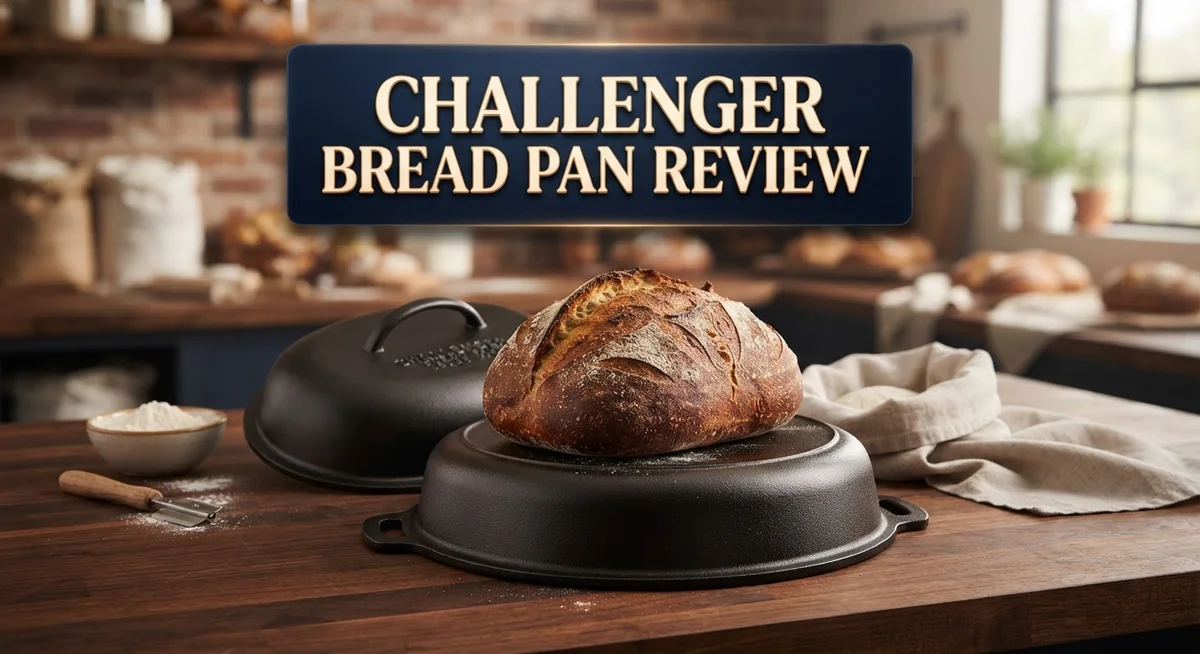
Challenger Bread Pan Review: Is It Worth Buying in 2026?
Baking bread at home can feel tricky. You want that perfect crust and soft inside. The Challenger Bread Pan promises to help you get there.
This cast iron pan comes with a bold design. It has a deep base and a heavy lid. Both work together to trap steam and heat.
Home bakers everywhere are talking about this pan. Does it really live up to the hype? We tested its features closely.
In this review, we look at size, weight, and heat capacity. We check how well it bakes bread. We also compare it to other popular options.
If you love baking crusty loaves, this pan might interest you. Let’s explore what makes the Challenger Bread Pan stand out from the crowd.
In a Nutshell
Here’s a quick snapshot of what you need to know about the Challenger Bread Pan.
- Build quality: This pan uses solid cast iron construction. It handles heat up to 500°F without trouble.
- Size and weight: The interior measures 11.5″ L x 9″ W x 5″ H. The whole pan weighs a hefty 20 lbs, split between the lid and base.
- Baking results: Bakers report excellent crust and crumb when making bread. Many say it beats simpler alternatives.
- Versatility: You can use this pan for more than bread. It works well for roasting and other oven tasks too.
- Maintenance matters: Cast iron needs care. Skip proper drying and seasoning, and rust risk becomes real.
- The tradeoff: This pan weighs about 10 lbs more than the Lodge Double Dutch. Some users also say it offers no extra baking benefit over a standard Dutch oven.
Overall, this pan suits bakers who want strong bread results and don’t mind the extra heft. It stands alongside competitors like Lodge, Emile Henry, and Le Creuset in the cast iron bread pan space.
Build Quality and Materials
Cast iron is the backbone of the Challenger Bread Pan. This material has earned its place in kitchens for over a century because it holds heat evenly and maintains consistent temperatures throughout your bake.
The pan features a two piece design: a base and a lid. Both components are made from solid cast iron, not enameled or coated versions. This means you get raw iron that develops seasoning over time. The thicker walls distribute heat slowly and steadily, which helps create those crispy crusts home bakers chase.
The weight tells an important story about build quality. At 20 lbs total (base 8.7 lbs, lid 11.3 lbs), this pan is substantially heavier than many competitors. That extra mass comes from thick iron walls designed to absorb and release heat at precise rates. Heavier doesn’t always mean better, but in bread baking, thermal mass matters significantly.
The interior dimensions measure 11.5″ L × 9″ W × 5″ H, giving you enough space for standard loaves without crowding. The exterior footprint is 15.4″ L × 10.5″ W, so you’ll need adequate oven rack space. The lid fits snugly over the base, trapping steam during the crucial first part of baking.
Heat capacity reaches up to 500°F, which covers most home baking needs. Cast iron’s natural properties allow it to handle high temperatures without warping or cracking when properly maintained. This durability means your pan can last decades if you care for it correctly.
One important consideration: bare cast iron requires maintenance. Without proper seasoning and storage, rust can develop. You’ll need to dry the pan completely after washing and apply a light oil coating. Some bakers prefer enameled alternatives to skip this step, but enamel adds cost and limits heat capacity.
The construction feels solid throughout. There are no weak points, loose handles, or thin spots. Every surface feels intentional and built to withstand regular use.

- THE ULTIMATE BREAD PAN - The only bread pan you'll need for artisan bread making: the revolutionary Challenger Bread Pan with...
- SAFER THAN DUTCH OVENS - The shallow base and easy-grip handles designed for bulky oven mitts eliminates risky transfers...
Last update on 2026-08-19 / Affiliate links / Images from Amazon Product Advertising API
Baking Performance and Results
When you bake bread in the Challenger Bread Pan, you get results that match what professionals create. The cast iron construction traps steam inside the enclosed space. This steam creates the signature crispy crust that home bakers chase.
Most users report that their loaves brown evenly across the top and sides. The heat distributes uniformly because cast iron holds temperature so well. You won’t see pale spots or burnt edges on your finished bread.
The interior space of 11.5″ L × 9″ W × 5″ H fits standard loaves perfectly. Your dough rises without touching the lid during the bake. This matters because contact with the lid can flatten your crumb structure.
The pan reaches temperatures up to 500°F, which gives you flexibility in your baking method. Some bakers preheat it to 450°F and still get outstanding results. Others push it higher for extra crust development. The thick cast iron base ensures heat stays constant throughout your bake.
One thing stands out: the lid sits tight. This seal keeps steam trapped where it belongs, not escaping into your oven. Better steam retention means better crust formation and better oven spring.
Bakers also notice their bread scores stay defined. The blade marks don’t blur or flatten out during baking. This happens because the stable heat environment lets dough expand predictably.
The pan works well for different bread styles too. Sourdough, sandwich loaves, and artisan rounds all bake beautifully. You’re not locked into one type of bread.
One consideration: your bread may bake slightly faster than in other Dutch ovens. The Challenger’s design seems to accelerate browning. Watch your loaf during the final 10 minutes to avoid over-browning.
Cleanup after baking is straightforward. Let the pan cool, then wipe it down with a damp cloth. Dry it completely to prevent rust spots from forming.
The baking performance makes this pan a solid choice if you care about crust quality and consistent results. Home bakers report that their bread improves noticeably after switching to this pan.
Size, Capacity, and Heat Retention
The Challenger Bread Pan offers practical dimensions that work well for home bakers. The interior space measures 11.5″ L × 9″ W × 5″ H, which accommodates standard loaves without squeezing them in. This size prevents your bread from touching the sides, allowing steam to circulate freely around the dough.
The exterior dimensions span 15.4″ L × 10.5″ W, so you need adequate oven space to work with this pan. Most standard home ovens handle it without problems, though you’ll want to check your oven’s interior before purchasing.
Heat retention is where this pan truly shines. Cast iron naturally stores and distributes heat evenly across the baking surface. The pan reaches temperatures up to 500°F, which covers virtually all home baking scenarios. This high heat capacity means your bread develops that crispy, caramelized crust that many bakers chase.
The weight of this pan deserves attention. At 20 lbs total, it’s substantially heavier than many competitors. The base weighs 8.7 lbs and the lid weighs 11.3 lbs. This heft comes from the thick cast iron construction, which directly contributes to superior heat retention and even baking. However, moving it requires some strength, especially when it’s hot.
The capacity works well for most baking needs. You can fit one large loaf comfortably, or two smaller loaves if you arrange them carefully. The 5″ height gives your dough enough room to rise without hitting the lid. Many bakers report their bread bakes slightly faster in this pan compared to other Dutch ovens, likely due to the intense heat the cast iron generates.
The tight fitting lid creates an excellent seal. This seal traps steam during the first part of baking, which creates the signature crispy crust. Once you remove the lid for the final bake, your loaf browns beautifully. The combination of size, heat capacity, and construction quality makes this pan reliable for consistent results across different bread styles and recipes.
Top 3 Alternatives
Le Creuset Dutch Oven

- Enameled cast iron delivers superior heat distribution and retention; Ready to use, requires no seasoning
- Easy-to-clean and durable enamel resists dulling, staining, chipping and cracking; Light colored smooth interior enamel...
Last update on 2026-09-04 / Affiliate links / Images from Amazon Product Advertising API
Le Creuset Dutch ovens work great for bread baking. The heavy cast iron construction keeps heat steady and even. Your bread gets that crispy crust you want. The enamel coating means you don’t need to season it like regular cast iron. You can use it on the stovetop or in the oven without worry.
The lid traps steam perfectly. Steam is key for good bread rise and texture. You get that bakery-quality result at home. The bright colors look nice on your table too. Cleanup is simple since nothing sticks to the enamel.
Staub Cocotte

- Glass porcelain finish, cannot be used on stovetops, including electric stoves
- Highly scratch resistant

Last update on 2026-09-04 / Affiliate links / Images from Amazon Product Advertising API
Staub cocottes are French-made cast iron cookware. They work just like Dutch ovens for bread baking. The black matte enamel interior resists sticking better than shiny surfaces. Your dough releases easily when you’re ready to bake.
The lid has small bumps on the inside. These bumps help condensation drip back onto your bread instead of pooling. You get more even moisture distribution. The result is bread with better texture and crust. Staub cocottes heat up fast and hold temperature well.
Lodge Cast Iron

- Quality Cast Iron Frying Pan: The Lodge Seasoned Cast Iron Skillet is loved for its great heat retention, incredible...
- Naturally Seasoned for Non-Stick Finish: Each pre-seasoned skillet arrives ready to use with a smooth non-stick finish that...
Last update on 2026-06-09 / Affiliate links / Images from Amazon Product Advertising API
Lodge cast iron is American-made and affordable. These pots work for bread baking when seasoned properly. The bare cast iron surface develops a natural non-stick layer over time. Your bread bakes in an authentic iron vessel.
Lodge cookware heats evenly and retains heat for a long time. You need to season it regularly to keep it in good shape. Hand washing is required to preserve the seasoning. The weight is substantial, so handle with care. Lodge pots last for generations with proper care and maintenance.
Versatility Beyond Bread
The Challenger Bread Pan does far more than just bake bread. Many home bakers discover its potential extends into everyday cooking once they own one.
Roasting vegetables becomes easier with this pan’s reliable heat distribution. The cast iron base heats evenly, so your potatoes, carrots, and root vegetables brown beautifully without hot spots. The tight fitting lid traps moisture, keeping vegetables tender inside while the exterior crisps up nicely.
You can use this pan for braising meats too. The heavy construction maintains steady temperatures, which is exactly what slow cooked dishes need. Chicken thighs, beef chuck, and pork shoulder all benefit from the gentle, consistent heat the pan provides.
Baking other items works well as well. Focaccia, pizza, and flatbreads all fit comfortably in the 11.5″ by 9″ interior space. The pan’s ability to reach 500°F means you can achieve restaurant quality results with these items just like you do with bread.
Some bakers use the Challenger for Dutch oven cooking. Soups, stews, and one pot meals simmer beautifully in cast iron. The lid seals in flavors and prevents excessive evaporation during long cooking sessions.
Desserts also work in this pan. Cobblers, cakes, and casseroles bake evenly thanks to the superior heat retention. The cast iron construction eliminates cold spots that plague standard baking sheets.
The two piece design makes this versatility practical. You can use the base and lid separately for different cooking tasks. The base alone works as a large skillet for stovetop cooking, while the lid can cover other Dutch ovens or pans.
The real advantage is consistency across different dishes. Whether you’re baking, roasting, braising, or simmering, the Challenger performs reliably. This means fewer specialty pans cluttering your kitchen. One heavy duty piece handles multiple cooking methods effectively.
Home cooks appreciate this flexibility. You invest in one quality pan and use it constantly for bread, vegetables, meats, and more. That’s what makes the Challenger valuable beyond its bread baking reputation.
Maintenance and Care Requirements
Maintaining your Challenger Bread Pan keeps it performing well for years. Cast iron care is straightforward once you understand the basics.
After each use, wash the pan with hot water and a soft brush or cloth. You can use mild soap if needed. Dry it completely with a towel right away. Moisture left on the surface can lead to rust spots over time.
Seasoning builds protection on your pan. The Challenger arrives pre seasoned, but you can add more layers. Heat the pan in your oven at 500°F for about 15 minutes. Wipe a thin coat of neutral oil across the interior and exterior. Let it cool completely. Repeat this process a few times per year for best results.
Storage matters too. Keep your pan in a dry place away from humidity. If you live in a damp climate, consider placing a paper towel inside the lid to absorb moisture. Never store it with the lid sealed shut, as trapped moisture causes rust.
The two piece design makes cleaning easier than single Dutch ovens. You can wash the base and lid separately. Pay special attention to the rim where they meet, as crumbs can collect there.
Avoid these common mistakes. Don’t soak the pan in water for long periods. Don’t put it in the dishwasher. Don’t use steel wool or harsh scrubbers on the cooking surface.
If rust spots appear, don’t panic. You can remove them by scrubbing with a paste of baking soda and water. Then re season that area. Light surface rust won’t affect your baking results.
The weight of this pan (20 lbs total) means it won’t move around during cleaning. This actually makes maintenance easier compared to lighter cookware. You get stability while you work.
Regular maintenance is simple. Wash, dry, and store properly. Your Challenger Bread Pan will reward you with consistent performance. Many bakers report their pans improve with age as seasoning deepens.
Pros and Cons
Pros
- Produces excellent bread with a crispy crust and consistent baking results
- Works beyond bread for roasting vegetables, braising meats, and Dutch oven cooking
- Cast iron construction provides superior heat retention and even distribution
- Two piece design makes cleaning simpler than traditional single Dutch ovens
- Tight fitting lid creates an excellent seal for steam trapping
Cons
- Weighs 20 lbs total, making it significantly heavier than comparable alternatives like the Lodge Double Dutch
- Requires consistent maintenance and seasoning to prevent rust spots from forming
- Cast iron needs careful handling and cannot be left soaking in water for extended periods
- Some bakers report no additional baking advantages compared to standard Dutch ovens
Who Should Buy It
The Challenger Bread Pan works best for serious home bakers who want consistent results. If you bake bread weekly or more often, this pan delivers the crispy crust and even browning you’re after. The tight seal traps steam perfectly, which creates that bakery quality crust at home.
You should consider this pan if you bake larger loaves regularly. The 11.5″ interior fits one large round loaf or two smaller ones comfortably. Frequent bakers appreciate having a dedicated tool that performs the same way every single time.
This pan suits cooks who want versatility beyond bread alone. You can roast vegetables, braise meats, and bake desserts in the same piece. The two piece design makes it easier to clean after different types of cooking compared to traditional Dutch ovens.
Home cooks who don’t mind the weight will enjoy this option. At 20 lbs total, it’s heavier than some alternatives like the Lodge Double Dutch. If you have limited storage space or struggle with heavy cookware, you might prefer a lighter option instead.
This pan fits your needs if you commit to proper maintenance. Cast iron requires regular seasoning and careful handling to prevent rust. You must wash it promptly after use and store it in a dry place. If you’re willing to follow these steps, the pan rewards you with years of reliable performance.
Cast iron enthusiasts love the Challenger because it combines specialty bread baking with general cooking flexibility. The heat retention is exceptional, and the cast iron construction distributes warmth evenly across the entire surface.
Skip this pan if you want something low maintenance or lightweight. Occasional bakers might find other options more practical for their needs. You should also avoid this choice if you prefer enamel coated cookware that requires less seasoning attention.
The Challenger Bread Pan appeals to dedicated bakers who value consistency and aren’t afraid of cast iron care. If this describes you, the pan becomes an essential kitchen tool.
Final Verdict
The Challenger Bread Pan stands out as a serious tool for serious bakers. It delivers consistent results loaf after loaf. Its cast iron build holds heat evenly and creates that signature crispy crust.
This pan does more than bake bread. You can roast vegetables, braise meats, and use it as a Dutch oven. That flexibility makes it a smart addition to any kitchen.
The weight is a real factor. At 20 pounds, this pan feels much heavier than options like the Lodge Double Dutch. Some bakers see this as a drawback, while others view it as a sign of quality.
Compared to competitors like Emile Henry or Breadtopia, the Challenger offers a different experience. Clay cloches provide steam differently than cast iron. The Challenger’s two piece design gives you more control over crust texture and shape.
Who should buy this pan? Bakers who bake often and want reliable results will benefit most. If you already enjoy cast iron cooking, this pan fits right into your routine.
Maintenance is part of the deal. You must wash, dry, and season this pan regularly. Skipping these steps invites rust. If that sounds like too much work, a simpler alternative might suit you better.
Home cooks who bake occasionally may not need this level of commitment. A basic Dutch oven could serve those needs just as well without the extra weight or care.
For those ready to commit, the Challenger Bread Pan rewards patience with excellent bread. It also earns its place as a multi purpose cooking tool. Few products manage to combine specialty baking with everyday versatility this well.
In short, this pan suits bakers who value long term performance over convenience. It asks for effort but gives back consistent, high quality bread. If that trade off appeals to you, the Challenger Bread Pan deserves a spot in your kitchen.
Frequently Asked Questions
Can I use the Challenger Bread Pan for things other than bread?
Yes, absolutely. This pan works great for roasting vegetables, cooking stews, and making Dutch oven meals. The two piece design gives you flexibility in the kitchen beyond just bread baking. Cast iron heats evenly, so you get consistent results whether you’re baking or cooking.
How do I prevent rust on my Challenger Bread Pan?
Keep your pan dry after every use. Wash it with warm water and a soft cloth, then dry it completely right away. Apply a thin layer of oil after drying to protect the surface. Never let it sit wet or soak in water for long periods.
Store it in a dry place. If you notice rust spots starting to form, season the pan again to restore the protective coating.
Is the Challenger Bread Pan worth the weight?
This pan weighs 20 pounds total, which makes it noticeably heavier than competitors like the Lodge Double Dutch. If you have wrist or arm issues, this matters. However, the weight does help with heat retention and stability during baking.
Consider your strength and how often you’ll move it. If you leave it on your stovetop most of the time, the weight becomes less of an issue.
What makes the Challenger different from a regular Dutch oven?
The Challenger has a specialized shape designed specifically for bread. The interior dimensions (11.5″ × 9″ × 5″) fit standard loaves perfectly. A regular Dutch oven is rounder and may not give you the same crust quality.
The tight fitting lid traps steam efficiently, which creates that crispy exterior bread bakers love. This design focus makes a real difference in your final loaf.

DK Jacks is a passionate food enthusiast, recipe developer, and culinary explorer. With a love for both traditional and innovative flavors, DK brings a fresh perspective to the kitchen. When not experimenting with new ingredients, you’ll find DK capturing food moments through the lens or sharing cooking tips with fellow foodies.🍽️📸✨
