
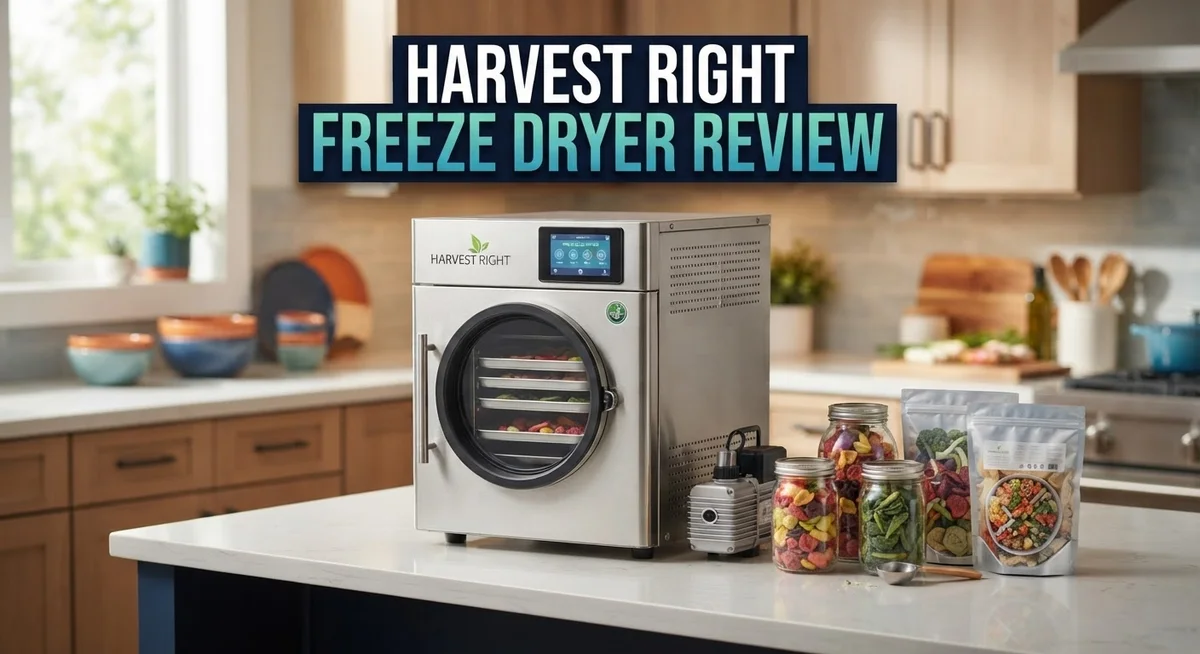
Harvest Right Freeze Dryer Review: Guide to Home Food Preservation
Do you want to store fresh food for years, not just weeks? A Harvest Right Freeze Dryer might be the answer you need.
This machine pulls moisture out of food. It keeps taste, texture, and nutrients intact for the long haul.
Harvest Right offers four sizes. You can pick Small, Medium, Large, or XL based on your needs.
Each unit connects to Wi-Fi. You can monitor cycles right from an app on your phone.
Families use it for fruits, vegetables, meats, and full meals. It fits easily into a normal home kitchen setup.
But is this appliance really worth your kitchen space? This review breaks down every detail you need.
We will cover specs, real pros and cons, and what daily use looks like. You will know exactly what to expect before you decide.
Let’s explore if this freeze dryer fits your lifestyle.
In a Nutshell
Here is the quick rundown on the Harvest Right Freeze Dryer before you decide.
• Storage power: This machine locks in food quality for years. It works great for fruits, veggies, meats, and full meals.
• Size flexibility: Four models fit different household needs. The Large holds up to 45 lbs per batch.
• Smart features: Wi-Fi connectivity lets you monitor cycles from your phone. This makes daily use simple and convenient.
• Running costs add up: Each cycle uses a lot of electricity. Expect noticeable increases on your power bill.
• Maintenance matters: Oil changes happen often. Skipping them can shorten your machine’s lifespan.
• Durability concerns: Some users report parts wearing out after two years. Customer support response times can be slow when repairs are needed.
• Noise factor: The drying process makes a grating sound. This might bother you if your kitchen sits near living spaces.
This appliance offers real long term food storage benefits. But it also demands patience with upkeep and operating costs.
Capacity and Size Options
Harvest Right offers four distinct models to match different household needs. The Small model handles 6 to 10 pounds of fresh food per batch. This size works well for individuals or couples who freeze dry occasionally.
The Medium model sits in the middle. It gives you more capacity than the Small without taking up excessive counter space. This option appeals to families who want regular preservation without a huge footprint.
The Large model jumps to serious production. It processes up to 45 pounds per batch. The dimensions are 24.3 inches wide, 37.4 inches deep, and 35.6 inches tall. This machine demands dedicated kitchen real estate.
The XL model matches the Large in capacity at 45 pounds per batch. It represents the top tier for serious food preservation enthusiasts. Both Large and XL models suit homesteaders and families with large gardens.
All models plug into a standard 110V outlet. You don’t need special electrical work for installation. This makes setup straightforward in most kitchens.
Size flexibility is a major strength here. You can choose based on your actual needs, not settle for one option. A single person doesn’t need 45 pounds of capacity. A family of six with a garden does.
The trade off appears in footprint and counter space. Larger models occupy significant room. You must measure your kitchen before ordering. Consider where the unit will sit during operation and storage.
Batch size matters for planning. If you preserve small amounts frequently, the Small model works fine. If you process large harvests once or twice yearly, the Large or XL makes sense. Medium users fall somewhere in between.
Each model shares the same core freeze drying technology. The difference lies in how much food moves through per cycle. More capacity means fewer batches to reach your preservation goals.
Think about your typical usage. How much fresh food do you want to preserve at once? How often do you plan to run cycles? Your answers point toward the right size for your situation.

- Hardcover Book
Last update on 2026-09-04 / Affiliate links / Images from Amazon Product Advertising API
Build Quality and Durability
Build quality on the Harvest Right Freeze Dryer shows both strengths and real limitations you should know about. The machine uses stainless steel construction for its main chamber, which resists corrosion during repeated freeze drying cycles. This material choice helps the unit survive years of moisture exposure without rusting internally.
However, durability concerns emerge from actual user reports. Some owners report performance degradation after two years, with drying cycles slowing down noticeably over time. The pump and motor components experience wear faster than many people expect. Oil changes become necessary frequently, which adds to maintenance demands and points to parts that need regular attention.
The overall build feels solid when you first unbox it, but long term reliability questions exist. Repair costs run high when components fail, and replacement parts can be difficult to source. Customer support doesn’t always help quickly when problems arise, leaving owners frustrated during breakdowns.
Noise levels during operation present another durability consideration. The grating sound the machine makes during drying cycles indicates mechanical stress on internal components. This constant noise suggests the motor and compressor work hard throughout each batch, which may contribute to faster wear over time.
The housing itself handles temperature and pressure changes well. Seals and gaskets maintain their integrity through multiple cycles, though these do eventually need replacement. The 110V electrical components remain stable, with no widespread reports of electrical failures.
For the Small and Medium models, durability data is less abundant in user reviews. Most reported issues come from Large and XL model owners who run more frequent cycles. Heavy daily use appears to accelerate component wear faster than occasional batch processing.
Consider your usage patterns before purchasing. If you plan light to moderate freeze drying, the machine should last several years reliably. Heavy daily use may push you toward earlier maintenance and potential replacement costs. The build quality exists, but this machine requires respect and regular maintenance to reach its full lifespan potential.
Performance and Drying Speed
The Harvest Right Freeze Dryer moves through drying cycles at a steady pace. Each batch typically completes within 24 to 40 hours, depending on food type and moisture content.
Fruits dry faster than meats. Leafy greens finish quicker than dense vegetables. This variation matters when you plan your preservation schedule.
The machine pulls moisture from food using a vacuum chamber and cooling system. Performance stays consistent across batches once you understand the process. However, drying speed does slow down over time as the machine ages.
Users report that cycles take longer after two years of regular operation. The vacuum pump gradually loses efficiency. Oil changes help maintain speed, but degradation still occurs. This is a key factor to consider if you freeze dry frequently.
All four models (Small, Medium, Large, and XL) use the same core drying technology. The difference lies in capacity, not speed. A full Large model batch takes roughly the same time as a full Small model batch. The XL model processes up to 45 pounds per cycle, which sounds impressive until you realize the time investment stays similar.
Operating the freeze dryer demands patience. You cannot rush the drying process without compromising food quality. The machine works on its own schedule, not yours.
The grating noise during operation matters for performance too. This sound indicates the vacuum pump and condenser working hard. While noise itself doesn’t slow drying, it reflects the machine’s intensity and energy consumption.
Electricity usage runs high during cycles. The machine pulls 900 to 1,500 watts per hour. This sustained power draw affects both your utility bills and the machine’s internal components over time.
If you need quick preservation solutions, freeze drying might feel slow compared to canning or dehydrating. The trade off is superior long term food storage. Foods maintain nutrition, color, and flavor that other methods cannot match.
Understanding these drying speeds helps you decide if the Harvest Right fits your food preservation goals. Plan your batches accordingly and maintain the machine regularly to keep performance at its best.
Top 3 Alternatives
Nuestra Freeze Dryer

- Create Long-Lasting Snacks: desidratadoras d alimentos small home use can Turn fruits, veggies, meats, dried snacks that can...
- Timing Design: After setting the timer LED display, adjusting with ease. The dual-knob design lets you customize time (up to...
Last update on 2026-09-04 / Affiliate links / Images from Amazon Product Advertising API
The Nuestra Freeze Dryer offers a straightforward approach to preserving food at home. This unit removes moisture from fruits, vegetables, and prepared meals efficiently. You get consistent results without complicated settings. The machine runs quietly, so it works well in most kitchens. Cleaning happens easily, and replacement parts are simple to find. Users appreciate the compact design that doesn’t demand excessive counter space.
Presto FoodSaver

- Airtight seal keeps food fresh up to 5x longer than ordinary methods
- One-touch open/close; automatically opens when seal is complete

Last update on 2026-09-04 / Affiliate links / Images from Amazon Product Advertising API
The Presto FoodSaver takes a different approach to food preservation. This system uses vacuum sealing rather than freeze drying. It removes air from bags and containers to extend shelf life. The process is fast, taking just seconds per item. You can seal fresh produce, meats, and baked goods. The unit connects to both bag and canister accessories. Many people find this method works well for short to medium-term storage needs.
Backyard Pro Freeze Dryer

- Large Capacity: The freeze dryer utilizes an 8.8-13.2 lbs (4-6 kg) capacity with a 4-layer tray design, handling substantial...
- Efficient Freeze Drying: Thanks to the powerful compressor, the freeze drying machine cools quickly. The -35°C cold trap...
Last update on 2026-09-04 / Affiliate links / Images from Amazon Product Advertising API
The Backyard Pro Freeze Dryer brings commercial-quality preservation to residential spaces. This machine handles larger batches than many home models. The cycle times are reasonable for family-sized portions. Temperature control stays precise throughout the drying process. Users report excellent results with camping meals and emergency food supplies. The unit includes helpful cycle presets for common foods.
Each option serves different preservation goals. Nuestra works best for everyday home use. Presto FoodSaver suits quick sealing jobs. Backyard Pro handles bigger volumes. Your choice depends on how much food you preserve and your available space.
Operating Costs and Energy Efficiency
Operating a Harvest Right Freeze Dryer requires understanding the electricity demands and ongoing maintenance expenses. The machine draws between 900 and 1,500 watts per hour during active drying cycles, which translates to daily operating costs of $1.00 to $2.80 depending on your local electricity rates and usage frequency.
Energy consumption varies by model size and cycle length. The Small model uses less power than the Large or XL versions. Longer drying cycles for denser foods like meats push electricity usage higher than quick fruit batches. If you run the machine daily, your monthly electricity bill will show a noticeable increase.
Beyond electricity, the freeze dryer demands regular maintenance that adds to your operating costs. Oil changes are frequent and essential. The vacuum pump requires fresh oil to function properly, and neglecting this maintenance shortens the machine’s lifespan and reduces efficiency. Users report that replacement oil and filters represent an ongoing expense you must budget for.
Performance degradation over time affects energy efficiency too. After approximately two years of regular operation, many users notice that drying cycles slow down considerably. A batch that once completed in 20 hours may stretch to 30 hours or longer. This slowdown means more electricity consumption per batch of food preserved.
The machine’s grating noise during operation signals the vacuum pump working hard, which correlates directly with energy usage. Louder operation typically means higher wattage draw. This relationship between noise level and power consumption helps you gauge when maintenance is needed.
Consider your freeze drying frequency before committing. Occasional users who run the machine once or twice weekly will see modest electricity increases. Heavy users operating daily cycles face substantial ongoing costs. Calculate how many batches you plan to process annually, then multiply by your typical cycle length to estimate realistic electricity expenses.
The combination of high wattage consumption and mandatory maintenance creates operating costs that extend well beyond the initial purchase. Factor these expenses into your long term food preservation budget.
Maintenance and Upkeep Requirements
Keeping your Harvest Right Freeze Dryer running smoothly requires consistent attention to several key areas. The machine demands regular maintenance beyond just turning it on and letting it work.
Oil changes stand out as the most frequent maintenance task. The vacuum pump needs fresh oil at regular intervals to function properly. Skipping this step leads to pump degradation and reduced performance. You should check the oil level before each cycle and change it according to the manual schedule. Used oil becomes contaminated with moisture from the food being dried, which affects pump efficiency.
The condenser coils need regular cleaning to maintain optimal performance. Frost and ice buildup on these coils reduces the machine’s ability to remove moisture from your food. A simple brush or soft cloth works well for this task. Cleaning takes just minutes but makes a noticeable difference in cycle times.
The vacuum pump itself requires monitoring over time. Users report that pump performance gradually decreases after two years of regular operation. This means your drying cycles will take longer as the machine ages. Replacement pumps are available but represent a significant expense and require technical knowledge to install.
Filter maintenance matters too. The machine has filters that collect particles and moisture. Clogged filters force the pump to work harder, consuming more electricity and generating additional wear. Check filters regularly and replace them when needed.
Seals and gaskets occasionally need attention. These rubber components prevent air leaks during the vacuum process. Over time they can dry out or crack, compromising the chamber’s ability to maintain proper pressure. Replacing them keeps your machine operating at peak efficiency.
General cleaning of the exterior and interior chamber prevents dust accumulation and keeps everything functioning smoothly. Wipe down surfaces and ensure the drain line stays clear of blockages.
Most maintenance tasks are straightforward and require no special tools. However, some repairs demand professional service, which can be costly and slow. Building a maintenance routine from day one extends your machine’s useful life and prevents unexpected breakdowns during important preservation projects.
Pros and Cons
Pros
- Freezes and stores food for years without spoiling or losing nutrition
- Available in four sizes, from small countertop to large commercial capacity
- Wi-Fi connectivity lets you monitor cycles from your phone
- Preserves almost any food type: fruits, vegetables, meats, complete meals, and leftovers
Cons
- Runs between 900 and 1,500 watts per hour, making daily operating costs significant
- Vacuum pump needs frequent oil changes and performance drops noticeably after two years of regular use
- Customer support is limited and repair costs add up quickly
- Machine produces loud grinding noise during every drying cycle
Who Should Buy It
The Harvest Right Freeze Dryer works best for specific types of people and situations. Let’s break down who should actually buy one.
Serious preppers and long-term food storage enthusiasts benefit the most. You want food that lasts years without spoiling or losing nutrition. This machine delivers exactly that. If you’re building an emergency supply or planning for food security, this device fits your goals perfectly.
Homesteaders and gardeners with surplus harvests find real value here. You grow more vegetables and fruits than you can eat fresh. Instead of letting them rot, you freeze dry them for later. The machine preserves your hard work and lets you enjoy homegrown food year-round.
People who meal prep regularly should consider it too. You can freeze dry complete meals and leftovers, then rehydrate them quickly when you need them. This saves time during busy weeks and reduces food waste significantly.
Hobby farmers and small food businesses might use the Large or XL models. These bigger machines handle substantial batches, from 20 to 45 pounds per cycle. If you’re selling freeze dried products or supplying a family farm stand, the capacity makes sense.
However, you shouldn’t buy this if you’re an occasional cook. Running it just once monthly doesn’t justify the operating costs and maintenance demands. The machine works best when used regularly, at least weekly. Casual users will find the expense frustrating.
Budget conscious households should pause too. Operating costs add up fast between electricity, oil changes, and eventual repairs. The machine requires consistent attention and money investment over time.
People who lack patience or technical skills might struggle. Maintenance isn’t complicated, but it’s frequent and necessary. You’ll handle oil changes, clean condenser coils, and monitor pump performance regularly. If this sounds tedious, reconsider.
Finally, those expecting perfect customer support should look elsewhere. Repairs can be costly, and help from the company is limited. You need self-reliance and problem-solving skills to own this machine happily.
The ideal buyer is committed, organized, and uses it frequently.
Final Verdict
The Harvest Right Freeze Dryer stands out as a serious tool for food preservation. It suits families who want real control over their food supply.
This machine rewards patience. Owners who commit to learning its rhythm see great results over time.
Long term thinkers will appreciate what this unit offers. Storing food for years without losing nutrition changes how a household plans meals.
That said, this freeze dryer asks for commitment. It needs space, attention, and a willingness to handle upkeep.
Think about your daily habits before buying one. Someone who cooks small batches occasionally may find this machine too much for their needs.
Someone who grows food, hunts, fishes, or buys in bulk will feel differently. For them, this dryer becomes a trusted kitchen partner.
Technology lovers will enjoy the app features. Checking a cycle from another room adds real convenience to a normally hands on process.
Families focused on emergency readiness often value this machine most. It fits naturally into a broader plan for self sufficiency.
New users should expect a learning curve. Reading the manual carefully and joining online communities helps smooth out early confusion.
Support from other owners often fills the gaps left by the company itself. Forums and groups share fixes, tips, and honest advice.
Anyone comparing options will notice this brand leads its category. Few direct competitors offer the same size range or feature set.
That leadership position means fewer choices for shoppers. It also means most reviews and support tools center around this one brand.
In the end, this freeze dryer works best for committed users. It rewards those who value food security over quick convenience.
Casual buyers might feel overwhelmed by its demands. Serious home food producers will likely call it a smart long term investment for their kitchen and pantry goals.
Frequently Asked Questions
How long does one freeze drying cycle take?
A complete cycle typically runs 20 to 40 hours. The exact time depends on your food type, moisture content, and how full you load the trays. Fruits and vegetables often finish faster than meats or complete meals. You can monitor progress through the Wi-Fi app if your model includes it.
What foods work best in a Harvest Right Freeze Dryer?
This machine handles almost everything. Freeze dry fresh fruits, vegetables, meats, fish, dairy products, and prepared meals. Many users preserve leftovers, soups, and stews successfully. Herbs, coffee, and even ice cream work too. The key is preparing your food properly before loading the trays.
Do I need to do anything special before freeze drying food?
Yes, prep matters. Slice fruits and vegetables uniformly so they dry evenly. Remove excess moisture from meats with paper towels. Spread items in a single layer on trays without overlapping. Smaller, thinner pieces dry faster than thick chunks. Read your manual for specific guidance on each food type.
How often do I need to maintain the vacuum pump?
Oil changes are required regularly during active use. Most owners change the pump oil every 20 to 50 hours of operation. This frequent maintenance keeps the vacuum strong and prevents performance drops. Skipping oil changes leads to slower cycles and potential damage. Budget time for this upkeep as part of your routine.
Can I use this machine in an apartment or small space?
The Large model measures about 24 inches wide and 37 inches deep. It needs proper ventilation and space around it. The bigger concern is noise. The machine produces a loud grinding sound during every cycle, which may bother neighbors in close quarters. Small models take up less room but have lower capacity.

DK Jacks is a passionate food enthusiast, recipe developer, and culinary explorer. With a love for both traditional and innovative flavors, DK brings a fresh perspective to the kitchen. When not experimenting with new ingredients, you’ll find DK capturing food moments through the lens or sharing cooking tips with fellow foodies.🍽️📸✨

