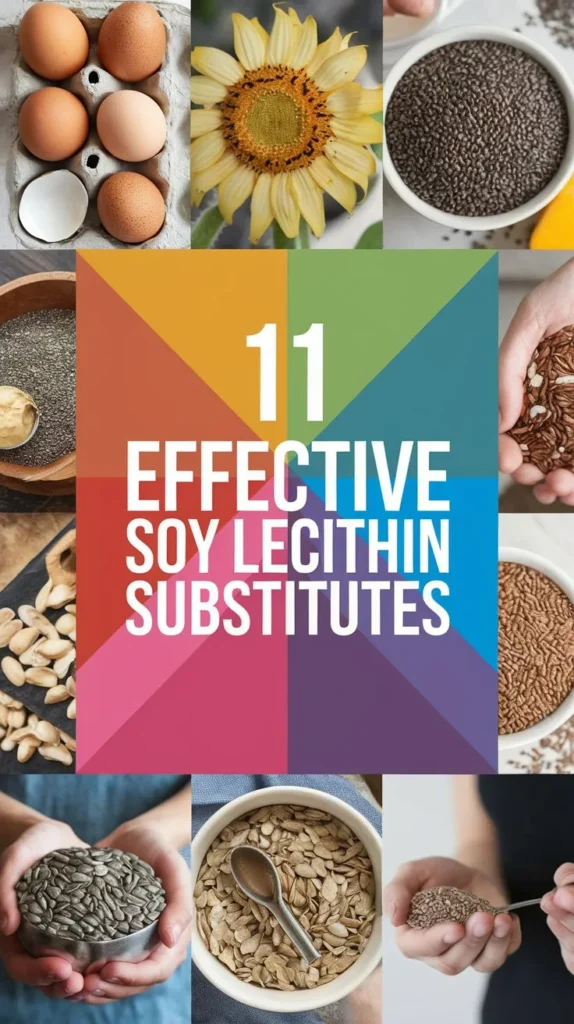
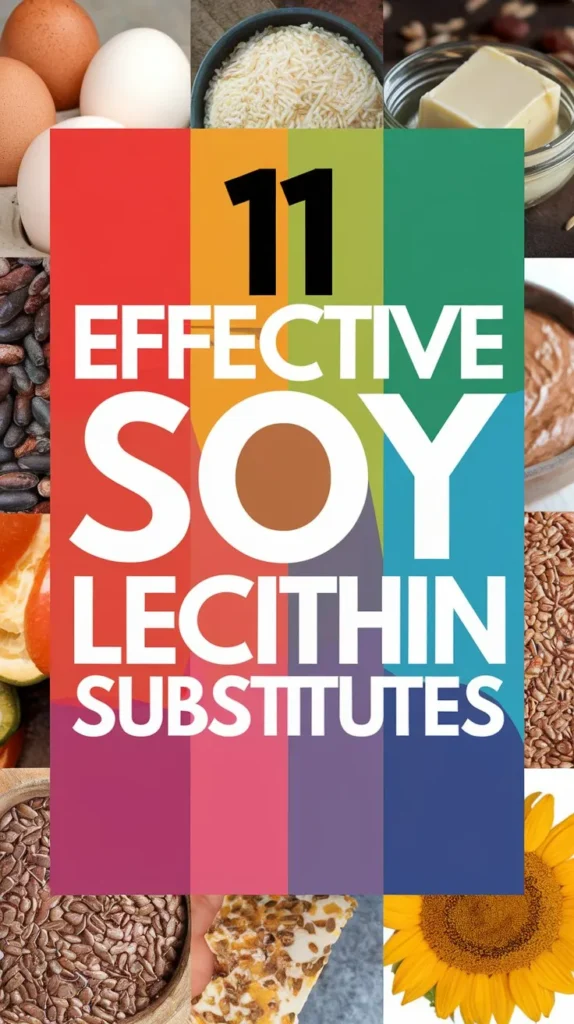
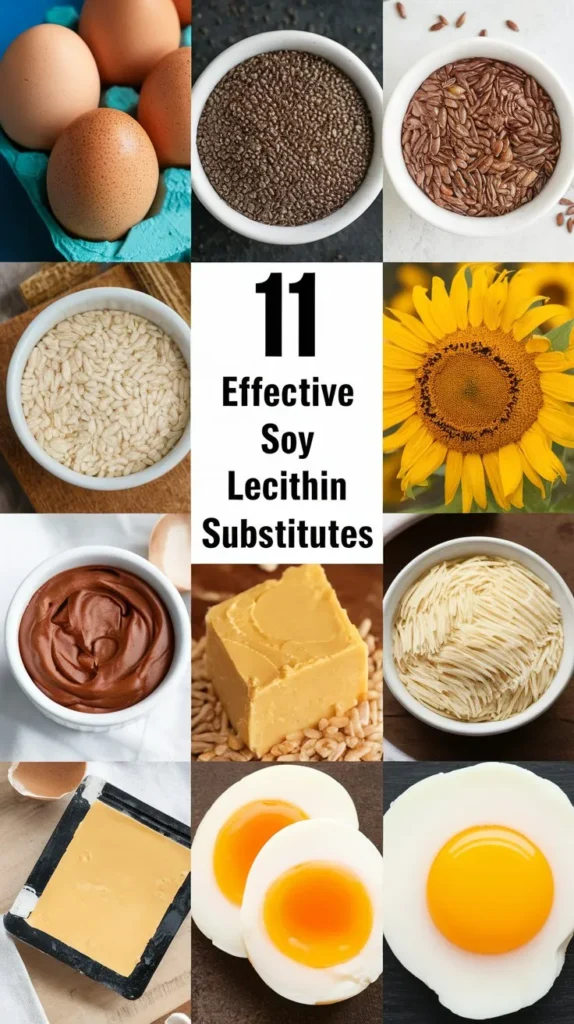
11 Effective Soy Lecithin Substitutes for Baking and Cooking
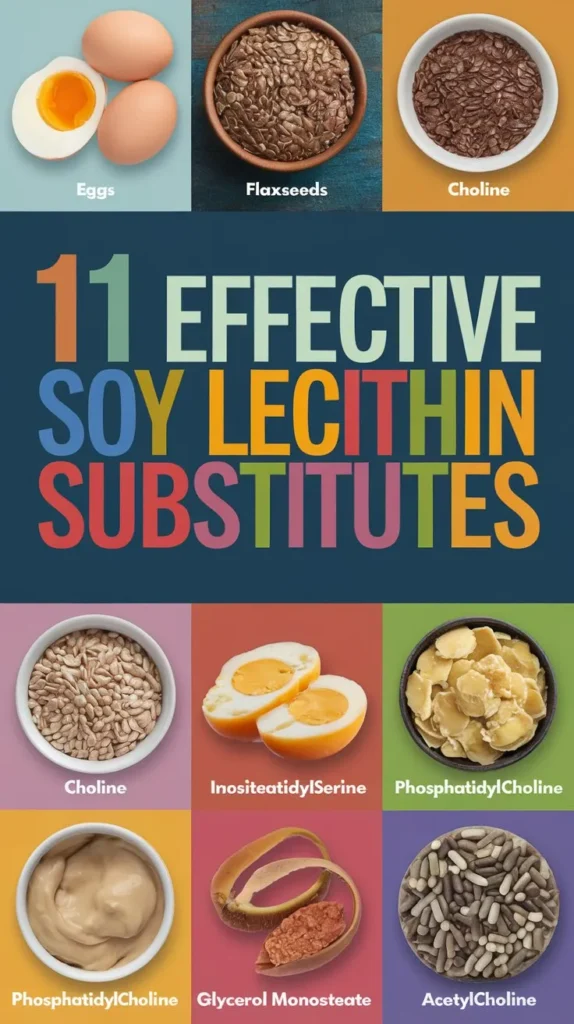
When you’re looking to substitute soy lecithin in your baked goods and dishes, you’re likely wondering what alternatives can provide similar emulsification and moisturizing properties. You might be surprised to find that common ingredients like egg yolks, sunflower lecithin, and even mustard can fill the gap.
But that’s not all – there are several other substitutes that can add unique flavors and textures to your recipes.
From flaxseed meal to cocoa butter, these alternatives can open up a world of possibilities in your kitchen. You’re about to discover the top 11 soy lecithin substitutes that will take your baking and cooking to the next level.
At a Glance
- Egg yolks can be used as a natural emulsifier in baking and cooking, with a typical ratio of 1 part yolk to 2 parts oil.
- Sunflower lecithin is a non-GMO, allergen-friendly alternative to soy lecithin, with a mild flavor and effective emulsifying properties.
- Olive oil can form a stable emulsion with water due to its high levels of monounsaturated fats, making it a suitable substitute in some recipes.
- Flaxseed meal can be used as a thickener, replacing soy lecithin in a 1:3 ratio with water, while apple sauce can add moisture to baked goods.
- Ghee, coconut oil, and cocoa butter are effective substitutes for soy lecithin in specific recipes, offering unique flavor and texture profiles.
Egg Yolks as Emulsifiers
In the domain of emulsification, versatility is key, and egg yolks have proven to be a valuable asset.
You’re likely familiar with their role in mayonnaise and hollandaise sauce, but their emulsifying properties extend far beyond these classic applications.
In emulsion science, egg yolks contain lecithin, a natural emulsifier that stabilizes mixtures of oil and water.
When using egg yolks as emulsifiers, you’ll need to weigh the yolk ratios.
Typically, a ratio of 1 part yolk to 2 parts oil is effective.
However, this can vary depending on the specific application and desired texture.
For instance, a higher yolk ratio may be necessary for thicker emulsions, while a lower ratio may be suitable for lighter dressings.
As you experiment with egg yolks in your recipes, keep in mind the principles of emulsion science.
You’ll need to carefully balance the ratio of oil to water and adjust the temperature and mixing techniques to achieve the desired consistency.
With practice and patience, you’ll reveal the full potential of egg yolks as emulsifiers, creating a range of delicious and stable emulsions that will elevate your baking and cooking.
Sunflower Lecithin Alternative
You’re likely to find that egg yolks aren’t the only natural source of lecithin, a versatile emulsifier.
Sunflower lecithin, extracted from sunflower seeds, is a popular alternative to soy lecithin. As a lecithin alternative, sunflower lecithin offers several benefits.
It’s a natural, non-GMO, and allergen-friendly option that’s rich in phospholipids, making it an effective emulsifier in baking and cooking.
Sunflower lecithin has a mild, neutral flavor, which won’t affect the taste of your final product.
It’s also an excellent substitute in recipes that require lecithin as an emulsifier, stabilizer, or moisturizer.
Additionally, sunflower lecithin has been shown to have potential health benefits, including reducing inflammation and improving cardiovascular health.
When using sunflower lecithin as a substitute, start by replacing 1:1 with soy lecithin, and adjust as needed to achieve the desired texture and consistency.
With its versatility and numerous benefits, sunflower lecithin is an excellent choice for those seeking a natural lecithin alternative.
Coconut Oil in Baking
Baking with coconut oil offers a unique opportunity to create tender, moist, and delicious treats while leveraging the oil’s distinct properties.
You can harness the benefits of coconut oil in baking by understanding its characteristics and adjusting your techniques accordingly.
When substituting coconut oil for soy lecithin, keep in mind the following key considerations:
1. Flavor profile: Coconut oil has a distinct flavor that can complement or overpower your baked goods, depending on the recipe.
Balance the flavor by adjusting the amount of sugar, spices, or other ingredients.
2. Fat content: Coconut oil is high in saturated fats, which can affect the texture and structure of your baked goods.
Adjust the ratio of wet to dry ingredients to compensate for the added fat.
3. Melting point: Coconut oil has a high melting point, which can affect the texture and consistency of your baked goods.
Use it in recipes where a tender, crumbly texture is desired.
4. Shelf life: Coconut oil can become rancid if not stored properly.
Guarantee you store it in an airtight container in a cool, dark place to maintain its quality and shelf life.
Olive Oil Emulsification
Your pantry staples play a pivotal role in emulsification, and olive oil is no exception.
As you explore soy lecithin substitutes, you’ll find that olive oil’s unique properties make it an effective emulsifier in its own right. When combined with water, olive oil forms a stable emulsion, thanks to its high levels of monounsaturated fats.
These fatty acids help to create a strong interfacial film, enhancing liquid stability and allowing for a more even distribution of ingredients.
In the domain of emulsion science, olive oil’s ability to form a stable emulsion is essential.
This is particularly important in baking, where emulsions can make or break the texture and consistency of final products.
By using olive oil as an emulsifier, you can create baked goods with improved structure and shelf life.
Additionally, olive oil’s mild flavor won’t overpower other ingredients, making it an ideal substitute for soy lecithin in many recipes.
With its versatility and effectiveness, olive oil is definitely worth considering as an emulsification solution in your baking and cooking endeavors.
Flaxseed Meal as Thickener
Three tablespoons of flaxseed meal can replace one tablespoon of soy lecithin in many recipes, making it a viable thickening agent in emulsification.
When using flaxseed meal as a thickener, verifying the correct ratio is crucial. You’ll need to mix 1 part ground flaxseed with 3 parts water to create a gel-like substitute for soy lecithin.
Some key points to keep in mind when substituting flaxseed meal for soy lecithin:
- Ratio matters: Always use the 1:3 flaxseed to water ratio to achieve the right consistency.
- Grind your flaxseed: Using pre-ground flaxseed can result in inconsistent textures, so grind your own for the best results.
- Mix well: Guarantee the flaxseed and water mixture is smooth and free of lumps.
- Adjust as needed: Depending on the recipe, you may need to adjust the flaxseed ratio or add more water to achieve the desired consistency.
Aquafaba in Recipes
As you explore alternatives to soy lecithin, aquafaba emerges as a versatile and effective substitute in various recipes.
Derived from the bean liquid of canned chickpeas, aquafaba has gained popularity in recent years for its unique properties.
When whipped, it creates a stable foam, making it an excellent substitute in vegan meringues and other desserts.
In baking, you can use aquafaba as a direct replacement for soy lecithin in many recipes.
Its emulsifying properties help to bind ingredients together, creating a smooth and consistent texture.
Additionally, aquafaba adds moisture and tenderness to baked goods, making it an excellent addition to cakes, cookies, and other sweet treats.
When using aquafaba in recipes, crucially, whip it until it becomes frothy and doubled in volume.
This helps to incorporate air and increase its emulsifying properties.
You can also flavor aquafaba with vanilla or other extracts to enhance the flavor of your baked goods.
With its unique properties and versatility, aquafaba is an excellent substitute for soy lecithin in many recipes.
Mustard as Emulsifier
While exploring the world of emulsifiers, you may stumble upon an unexpected ingredient: mustard. Yes, you read that right – mustard!
It’s a condiment commonly used to add flavor to dishes, but it also has emulsifying properties that make it a viable substitute for soy lecithin.
Mustard’s emulsifying properties come from its high content of mucilage, a thick, glue-like substance that helps bind ingredients together.
When used in small amounts, mustard can enhance the texture and stability of emulsions, making it an attractive option for bakers and cooks.
4 key points to ponder when using mustard as an emulsifier:
- Mustard flavor: Mustard will impart a distinct flavor to your dish, so choose a type that complements your recipe.
- Mustard types: Different types of mustard, such as Dijon or whole-grain, have varying levels of mucilage and flavor profiles.
- Ratio: Start with a small ratio of mustard to other ingredients and adjust to achieve the desired texture.
- Combination: Mustard works well in combination with other emulsifiers, like aquafaba, to enhance its effectiveness.
Ghee for Richer Flavor
One oft-overlooked ingredient that can serve as a soy lecithin substitute is ghee, a type of clarified butter with a rich, nutty flavor.
You can use ghee to enhance the flavor and texture of your baked goods and dishes. The ghee benefits are numerous, including its ability to add moisture, richness, and a subtle nutty flavor to your creations.
When substituting ghee for soy lecithin, you’ll want to use a ghee ratio of 1:1. This means that if a recipe calls for one teaspoon of soy lecithin, you can replace it with one teaspoon of ghee.
Keep in mind that ghee has a stronger flavor than soy lecithin, so start with a small amount and adjust to taste.
Ghee is particularly useful in recipes that require a high-fat content, such as cakes, cookies, and frostings.
It can also be used to add richness and depth to sauces, soups, and stews.
With its unique flavor and versatility, ghee is an excellent soy lecithin substitute that can elevate your baking and cooking to the next level.
Apple Sauce as Moisturizer
Three tablespoons of apple sauce can replace one teaspoon of soy lecithin in your recipe, making it a great moisturizing substitute in baked goods and desserts.
You’ll notice the added benefits of skin hydration and moisturizing properties in your final product. Apple sauce is a natural humectant, locking in moisture and creating a tender crumb.
When using apple sauce as a substitute, keep the following points in mind:
- Flavor profile: Apple sauce will introduce a subtle sweetness and fruity flavor to your baked goods.
- Moisture content: Apple sauce contains more water than soy lecithin, so you may need to adjust the liquid content in your recipe.
- Texture: Apple sauce can make your baked goods slightly denser and heavier.
- Shelf life: Apple sauce can affect the shelf life of your baked goods, making them more prone to spoilage.
Pumpkin Puree in Baking
Using pumpkin puree as a soy lecithin substitute in baking can be a game-changer, particularly during the fall season when pumpkin is in abundance.
You’ll find that it not only adds moisture to your baked goods but also enhances the flavor profile.
When using pumpkin puree, keep in mind that it’s crucial to maintain a balanced pumpkin spice ratio to avoid overpowering your desserts.
A general rule of thumb is to use 1/4 teaspoon of pumpkin spice for every 1/2 cup of pumpkin puree.
In terms of pumpkin flavor enhancement, you can experiment with different spices like cinnamon, nutmeg, and ginger to create unique flavor combinations.
Additionally, pumpkin puree can help to strengthen the structure of your baked goods, making them more tender and less prone to crumbling.
When substituting soy lecithin with pumpkin puree, start by replacing 1 tablespoon of soy lecithin with 2-3 tablespoons of pumpkin puree.
Adjust the ratio as needed to achieve the desired texture and consistency in your final product.
Cocoa Butter for Chocolate
When working with chocolate recipes, you’ll find that cocoa butter is an excellent soy lecithin substitute, particularly when you need to enhance the chocolate’s flavor and texture.
This is because cocoa butter contains natural emulsifiers that help to stabilize mixtures, much like soy lecithin. Additionally, cocoa butter adds a rich, velvety texture to your baked goods, making it an ideal substitute in dark chocolate recipes.
Four benefits of using cocoa butter as a soy lecithin substitute:
- Enhances flavor: Cocoa butter intensifies the flavor of dark chocolate, creating a deeper, more complex taste experience.
- Improves texture: Cocoa butter adds a smooth, melted consistency to your chocolate-based recipes.
- Natural emulsifier: Cocoa butter contains natural emulsifiers that help to stabilize mixtures, reducing the need for additional additives.
- Increases shelf life: Cocoa butter helps to extend the shelf life of your baked goods by preventing the growth of bacteria and mold.
FAQs
Can I Use Soy Lecithin Substitutes in Vegan Chocolate Recipes?
When you’re crafting vegan chocolate recipes, you can successfully swap soy lecithin with substitutes, ensuring a smooth chocolate texture and rich flavor profiles; just be mindful of the emulsifier’s functionality to achieve ideal results.
Do Emulsifiers Affect the Nutritional Value of Baked Goods?
You’re wondering if emulsifiers affect the nutritional value of baked goods. The answer is, they can impact nutrient retention, but it depends on the type and amount used.
Are Soy Lecithin Substitutes Suitable for People With Nut Allergies?
You’re likely wondering if soy lecithin substitutes are safe for people with nut allergies. Fortunately, most substitutes are allergy-friendly, avoiding common allergens like nuts, making them a suitable option for those with nut allergies, allowing you to bake with confidence.
Can I Make My Own Emulsifiers at Home From Natural Ingredients?
You can create your own DIY emulsifiers at home by mixing natural ingredients like mustard, honey, and vinegar to produce homemade surfactants, allowing you to control the composition and tailor them to your specific needs and preferences.
Do Soy Lecithin Substitutes Have a Shorter Shelf Life Than Soy Lecithin?
You’ll find that soy lecithin substitutes typically have a shorter shelf life due to varying expiration rates, which are heavily influenced by storage conditions, such as temperature, humidity, and light exposure, impacting their overall stability and effectiveness.



DK Jacks is a passionate food enthusiast, recipe developer, and culinary explorer. With a love for both traditional and innovative flavors, DK brings a fresh perspective to the kitchen. When not experimenting with new ingredients, you’ll find DK capturing food moments through the lens or sharing cooking tips with fellow foodies.🍽️📸✨